Architecture in Ulster County Starts With Listening, to the Land and to You
When we begin a project in Ulster County, we don’t start with a style. We start with questions. What does the land want to do? What history already exists here? And how do you actually want to live? These questions guide every early conversation, site visit, and sketch, ensuring that the architecture grows from a deep understanding of place rather than from preconceived ideas.
Ulster County’s landscapes are varied and expressive, wooded slopes, open meadows, historic hamlets, and quiet rural roads all carry their own logic. Listening to the land means understanding topography, light, climate, and views, but also recognizing what should remain untouched. At the same time, listening to you means translating daily routines, long-term goals, and personal values into spaces that feel intuitive, comfortable, and enduring.
Designing homes in this region is never just about creating something new. It’s about finding balance, between forest and field, old and new, tradition and innovation. Thoughtful architecture here respects the past without being constrained by it, allowing contemporary design to coexist naturally with historic context and rural character.
Over years of working throughout the Hudson Valley, we’ve learned that the most successful projects are the ones that respond carefully to their surroundings while still embracing contemporary ways of living. These homes feel grounded rather than imposed, shaped as much by the site as by the people who inhabit them.
Our work in Hudson Valley residential architecture reflects this balance every day, whether we’re designing a new passive house, adapting an existing structure, or planning a long-term retreat that will evolve with a family over time. Each project is approached as a living framework, one that supports change, sustainability, and a lasting connection between home, landscape, and the people who call it their own.
The Ulster County Landscape Shapes Every Design Decision
Ulster County’s landscape is remarkably diverse. Rolling farmland gives way to wooded hillsides, rocky ridgelines, wetlands, and stream corridors. These features aren’t obstacles, they’re the starting point. Each site presents its own opportunities and constraints, and understanding those conditions early allows the architecture to respond with clarity rather than compromise.
Rather than imposing a uniform approach, we treat every property as a unique ecosystem. Soil conditions, prevailing winds, seasonal changes, and surrounding land use all influence how a home should be shaped, oriented, and constructed. By respecting these forces, the design becomes more resilient, more efficient, and more connected to its setting.
We spend time on site early in the process because maps and surveys only tell part of the story. Walking a property reveals how water moves after heavy rain, where the sun breaks through in winter, and which views feel expansive versus exposed. These firsthand observations inform decisions about placement, massing, and circulation that simply can’t be made from a desk.
Being present on the land also helps identify subtle but important details, existing stone walls, mature trees, or natural clearings, that can become integral parts of the final design rather than elements to be removed.
Designing With Topography Instead of Fighting It
We’ve learned through experience that homes designed with the land tend to age better and cost less to maintain. That might mean:
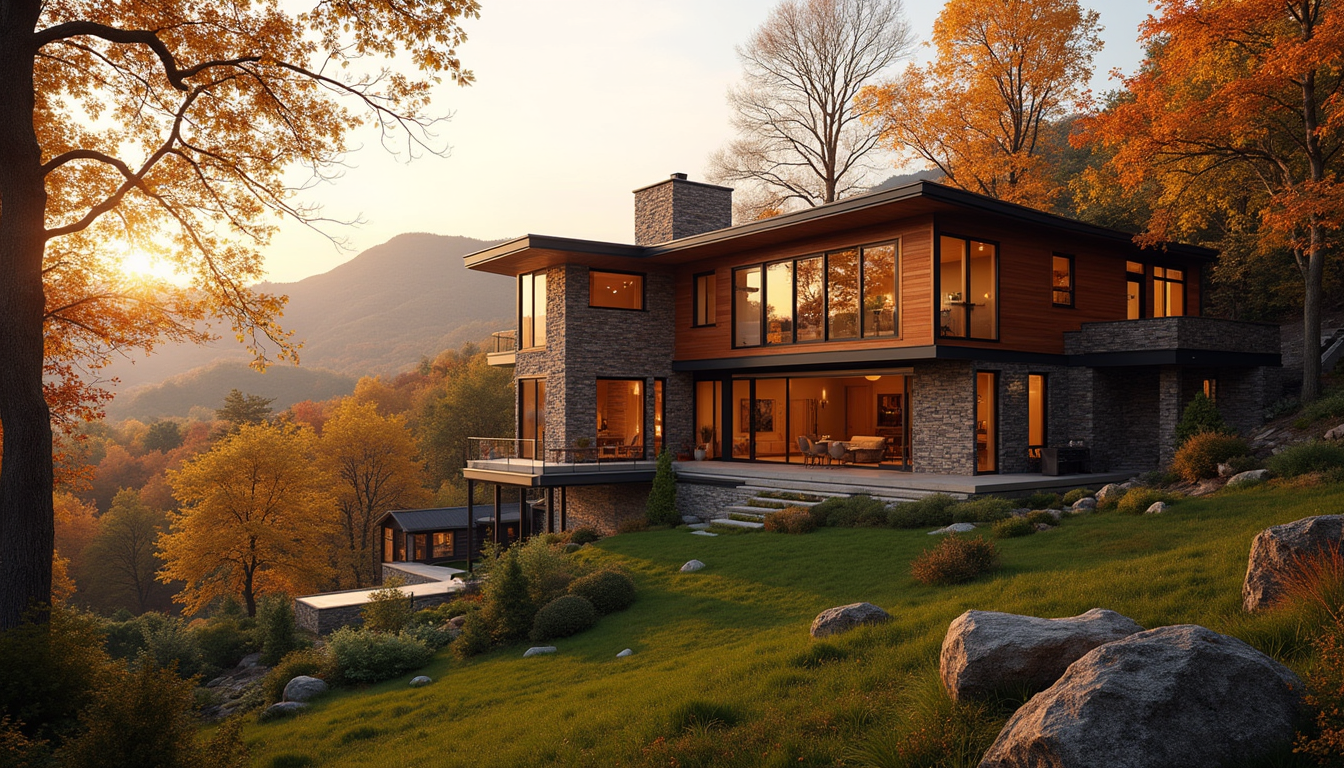
- Stepping a house down a slope instead of flattening it
- Using grade changes to naturally separate public and private spaces
- Orienting primary rooms toward the best light rather than the road
Designing with topography allows the building to work with gravity, drainage, and natural circulation patterns rather than resisting them. These strategies often lead to simpler structural solutions, more efficient foundations, and a closer relationship between interior spaces and the surrounding landscape.
These strategies reduce excavation, protect existing trees, and create buildings that feel settled into their environment rather than imposed on it. Over time, this approach results in homes that feel calm, grounded, and inevitable, as if they belong exactly where they are.

Climate Awareness Is Essential in the Hudson Valley
Ulster County’s four distinct seasons bring real design challenges. Cold winters, humid summers, heavy snow, and increasing storm intensity all influence how a house should be built. Architecture in this region must respond not only to average conditions, but to extremes that test comfort, durability, and performance year after year.
We regularly see homes that look beautiful but struggle to perform because climate wasn’t fully considered during design. Overheated rooms, ice dams, moisture problems, and high energy bills are common regrets. These issues are rarely the result of a single mistake, they usually stem from early design decisions that didn’t fully account for how the building would behave in this specific climate.
Our approach to energy-efficient house plans focuses on long-term comfort and durability. Rather than relying on add-on solutions later, we prioritize fundamental strategies that address heat, air, and moisture from the outset:
- High-performance insulation and airtight assemblies
- Window placement that captures winter sun and limits summer heat gain
- Roof forms designed for snow shedding and drainage
- Mechanical systems sized to the actual needs of the house
Together, these strategies help stabilize interior temperatures, reduce energy demand, and protect building assemblies from long-term wear. Homes designed this way tend to feel more comfortable in every season, with fewer drafts, more consistent temperatures, and quieter mechanical operation.
As PHIUS Certified Passive House Consultants and Certified Passive House Tradespeople, we use building science to inform decisions early, before performance issues become expensive fixes. Modeling, detailing, and coordination at the design stage allow us to anticipate how a home will perform long before construction begins.
For broader best practices, we often reference guidance from the U.S. Department of Energy when discussing high-performance residential construction. Aligning local experience with proven research helps ensure that homes in the Hudson Valley are not only well-designed, but truly prepared for the climate they face.
Respecting History Without Freezing It in Time
Ulster County is rich with historic farmhouses, barns, and industrial buildings. Many of our projects involve working near or directly with older structures. These buildings often carry generations of use and adaptation, and their value lies not only in their appearance, but in how they were built and why they endured.
Respecting history doesn’t mean replicating the past. It means understanding what made those buildings work, their proportions, materials, and relationship to the land, and carrying those lessons forward. Historic structures in Ulster County were typically shaped by climate, available resources, and practical living needs, resulting in forms that feel grounded and purposeful.
Rather than mimicking details or applying stylistic references, we study how these buildings sit on the land, how they manage light and weather, and how their interiors are organized. This understanding allows new work to feel connected to its context without becoming nostalgic or imitative.
We’ve worked on projects where:
- New additions are clearly contemporary but scaled to the original structure
- Modern materials are paired with traditional forms
- Existing buildings are adapted for new uses while retaining their character
In these cases, contrast is often intentional. Clear distinctions between old and new help preserve the integrity of the original structure while allowing the architecture to evolve honestly. Thoughtful material choices and restrained detailing ensure that additions feel complementary rather than competitive.
This approach helps homes feel authentic rather than themed, and it often simplifies approvals in areas with historic or community oversight. More importantly, it results in architecture that acknowledges the past while remaining flexible enough to support modern living, buildings that continue a story rather than attempting to freeze it in time.
Navigating Local Codes, Zoning, and Permits
Designing in Ulster County requires more than creative vision. Zoning regulations, environmental protections, and local review processes all influence what’s possible. Each municipality has its own set of rules, interpretations, and expectations, making local knowledge a critical part of the design process.
Depending on the site, projects may involve:
- Zoning compliance or variances
- Wetlands and environmental review
- Planning board or architectural review board approvals
- Coordination with local building departments
Understanding how these layers interact allows us to anticipate challenges before they become obstacles. Site conditions, building use, and neighborhood context can all trigger specific requirements that shape setbacks, height limits, footprint, and overall massing.
We design with these realities in mind from the start. Rather than developing a concept in isolation, we align design decisions early with applicable codes and review criteria. This integrated approach reduces the risk of significant redesigns and keeps the project moving forward with fewer surprises.
Early alignment with local requirements helps avoid redesigns, delays, and unnecessary frustration later in the process. By addressing zoning and regulatory considerations alongside architectural goals, we create proposals that are both ambitious and achievable.
Transparency about timelines and approvals is part of how we help clients feel confident moving forward. Clear communication about process, sequencing, and potential review milestones allows clients to make informed decisions and plan realistically as their project progresses.
Innovation That Serves Daily Life
Innovation in residential architecture isn’t about novelty. It’s about solving real problems and improving how a home feels to live in. The most meaningful innovations often go unnoticed day to day, quietly supporting comfort, health, and ease of use rather than calling attention to themselves.
In Ulster County, innovation often shows up quietly. Climate, energy costs, and long-term durability all encourage solutions that are practical, efficient, and resilient rather than experimental for their own sake. Successful innovation here tends to be grounded in building science and informed by how homes are actually occupied over time.
Simple building forms that are easier to insulate and maintain often outperform more complex shapes, both energetically and financially. Advanced ventilation systems that improve indoor air quality contribute to healthier interiors, especially in well-sealed, high-performance homes. Thoughtful layouts that reduce square footage without sacrificing comfort help control construction costs while making spaces feel more intentional and usable.
These kinds of innovations are less about adding layers of technology and more about refining fundamentals, structure, envelope, air, light, and flow. When these elements work well together, homes feel calmer, more efficient, and easier to live in.
Publications like ArchDaily frequently highlight how sustainable design features can be integrated seamlessly into residential architecture when performance and livability are prioritized. That alignment, between innovation and everyday experience, is what allows architecture to support daily life in meaningful, lasting ways.
Designing Homes Around Real Lifestyles
One of the most important parts of our process is understanding how you live, not how you think you should live. Architecture works best when it supports real routines, habits, and preferences rather than idealized versions of daily life.
We take time early on to understand how a household functions from morning to night, on weekdays and weekends, and across seasons. These insights inform decisions that affect comfort, efficiency, and long-term satisfaction in ways that square footage alone never can.
We ask practical questions:
- How do you enter the house day to day?
- Where do muddy boots, pets, and groceries go?
- Do you host large gatherings or prefer quiet evenings?
- How might your needs change over time?
These conversations shape layouts that feel intuitive rather than forced. Circulation becomes clear, storage is placed where it’s actually needed, and spaces are sized and connected based on how they’re used, not how they look in a photograph.
A well-placed mudroom, a flexible workspace, or a ground-floor bedroom can prevent years of small daily frustrations. Thoughtful planning at this level allows homes to adapt gracefully as families grow, work patterns shift, or mobility needs change.
Our custom home design services are fully tailored to these realities, not based on pre-set plans or stylistic templates. Each home is designed as a direct response to the people who live there, resulting in spaces that feel natural, supportive, and easy to inhabit over time.
Modern Architecture With Regional Sensitivity
Modern homes can feel deeply connected to Ulster County when they respond thoughtfully to place. Rather than standing apart from their surroundings, the most successful modern projects draw strength from the landscape, climate, and cultural context that define the region.
As a modern home architect Hudson Valley, we focus on creating architecture that is clear and contemporary without feeling abstract or disconnected. Design decisions are informed by site conditions, seasonal changes, and how the building will be experienced over time.
As a modern home architect Hudson Valley, we focus on:
- Clean forms that complement natural surroundings
- Materials chosen for longevity in a freeze-thaw climate
- Window compositions that frame specific views rather than generic vistas
Modern design works best here when it’s restrained, purposeful, and grounded in local conditions. Carefully proportioned forms, honest material expression, and deliberate connections between interior and exterior allow modern architecture to feel both timeless and regionally appropriate. The result is architecture that feels current without being trend-driven, and distinctive without overwhelming its setting.
Sustainability as a Practical, Long‑Term Strategy
Sustainability isn’t a feature, it’s a mindset. In this region, sustainable design often aligns naturally with comfort, resilience, and cost control. Thoughtful responses to climate, site conditions, and building performance tend to produce homes that are not only more efficient, but also more comfortable to live in year-round.
Rather than treating sustainability as an add-on, we integrate it into fundamental design decisions from the earliest stages. Orientation, massing, envelope performance, and material selection all play a role in reducing long-term energy use and operational costs without sacrificing livability or design clarity.
Our work in sustainable architecture in Kingston NY emphasizes:
- Reducing energy demand before adding technology
- Designing durable assemblies that age well
- Making homes adaptable to future systems and needs
By focusing first on passive strategies and long-lasting construction, we help ensure that mechanical systems can be simpler, more efficient, and easier to upgrade over time. This approach supports flexibility as energy standards evolve and new technologies become available.
These choices don’t always add upfront cost, but they consistently add long-term value. Lower operating expenses, increased durability, and improved comfort all contribute to homes that perform better over decades, not just at the moment of completion.
Design‑Build and Design‑Bid‑Build: Finding the Right Fit
Clients often ask about project delivery methods. Both design-build and design-bid-build can work well in Ulster County when expectations are clear. The right approach depends less on the size or style of the project and more on how decisions are made, how risk is managed, and how communication flows among the team.
Design-Bid-Build allows for competitive pricing after design is complete, giving clients a clear comparison of costs before construction begins. This method can be particularly effective when the scope is well defined and the client values price transparency and contractor selection through a bidding process.
Design-Build, on the other hand, encourages early collaboration between architect and builder. With construction expertise involved from the beginning, design decisions can be informed by real-time cost feedback, constructability insights, and scheduling considerations. This often leads to a more streamlined process and can reduce surprises during construction.
We’ve worked successfully in both frameworks and help clients choose the approach that best supports their goals, budget structure, and timeline. Our role is to clarify the trade-offs, set realistic expectations, and ensure that the chosen delivery method aligns with the complexity of the site, regulatory environment, and desired level of involvement throughout the project.
Lessons Learned From Building in Ulster County
Every project teaches us something new. Over time, patterns emerge. Working across a wide range of sites, budgets, and family needs reveals what consistently supports long-term comfort, performance, and satisfaction.
Simpler forms tend to perform better. Clear structural systems, restrained massing, and straightforward rooflines often lead to improved energy efficiency, easier maintenance, and greater durability over time.
Early coordination with builders reduces surprises. When construction expertise is integrated early, details are resolved more efficiently, costs are better understood, and decision-making becomes more informed throughout the process.
Homes that prioritize light and flow feel larger than their square footage. Thoughtful circulation, visual connections between spaces, and careful orientation toward daylight can dramatically affect how a home is experienced on a daily basis.
These lessons come directly from post-occupancy conversations and long-term relationships with clients who live in the homes we design. Hearing how spaces perform years after completion, what works, what evolves, and what truly matters, provides insights that no drawing set alone can offer.
Local insights shared in Hudson Valley Magazine often echo what we see firsthand, buyers and homeowners increasingly value quality, efficiency, and regional authenticity over trend-driven design. In Ulster County, architecture that responds to place, climate, and lifestyle continues to prove more meaningful and enduring than design driven by short-term aesthetics.
Architecture as a Collaborative, Trust‑Based Process
We see architecture as a partnership. Our role is to guide, question, and translate, not to dictate. Every project benefits from open dialogue, shared understanding, and clearly defined expectations from the earliest conversations through construction and beyond.
Collaboration means listening carefully to how clients live, what they value, and where flexibility is most important. It also means offering clear professional insight when choices carry long-term implications. By treating clients as active participants in the process, the design evolves with intention rather than assumption.
We’re open about:
- Cost implications of design decisions
- Schedule realities
- Trade-offs between aesthetics, performance, and budget
These conversations happen early and often, allowing priorities to be adjusted before small decisions become costly changes. Transparency around constraints does not limit creativity, it focuses it, helping align ambition with feasibility.
That transparency builds trust and leads to homes that feel considered, comfortable, and deeply connected to place. When expectations are clear and communication remains consistent, the process becomes more rewarding, and the resulting architecture reflects not only thoughtful design, but a strong and lasting partnership.
Thinking About Your Own Project?
If you’re exploring a project in Ulster County or the greater Hudson Valley, early conversations can make all the difference. Discussing goals, site conditions, and timing upfront helps clarify what’s possible and sets the foundation for a smoother, more informed process.
Thinking about your own project? Let’s talk. Whether you’re at the earliest stage of idea-gathering or already have a site in mind, an initial conversation can help identify opportunities, constraints, and next steps.
Have a site you’re considering? We’d love to see it. Reviewing a property early allows us to share insights about zoning, access, orientation, and long-term potential before major decisions are made.
Reach out to us if you’re ready to explore what’s possible on your land. We’re happy to start with a conversation, no pressure, just a thoughtful exchange about your goals and how architecture can support them.