There’s a moment every family knows. It happens on an ordinary Sunday, the kitchen is loud, someone’s laughing in the next room, a child is asleep on the couch with the dog pressed against them, and the whole house feels like it’s holding all of it together without effort. Nobody planned the moment. Nobody staged it. It just happened, the way the best things in family life always do, spontaneously, in a space that was ready for it.
We think about that moment a lot. Not because it’s sentimental, though it is, but because it tells us something precise and useful about what architecture is actually for. A home isn’t a backdrop for family life. It’s an active participant in it. The way rooms connect, the way light moves through a space in the afternoon, the way a kitchen opens toward a living area where children play all of these decisions shape the moments that become memories. They determine whether a family gathers or scatters, whether a house feels generous or constricted, whether the people inside it feel held or merely sheltered.
This is the dimension of residential architecture that rarely makes it into the brochure. We talk about square footage and energy performance and material quality, and all of those things matter enormously. But underneath them, driving them, giving them meaning, is this: the way a well-designed home shapes a family’s life together over decades. That’s what we’re really building when we design a custom home. Not walls and roofs. Memory infrastructure.
We’ve been doing Hudson Valley residential architecture long enough to know that the families who are happiest in their homes years after completion aren’t necessarily the ones who got the biggest square footage or the most impressive finishes. They’re the ones whose homes were designed around the specific, irreplaceable texture of their particular life together. And that requires a very different kind of conversation at the start of a project, one that goes well beyond room counts and budget ranges into the daily rhythms, the family habits, and the moments that a household most wants to protect and repeat.
Here’s how we think about that work, and why it shapes every decision we make from the first sketch to the final walkthrough.
The Architecture of Everyday Life
The moments that matter most in a family home are rarely the grand ones. They’re not the dinner parties or the holiday gatherings, though those matter too. They’re the Tuesday mornings, the after-school arrivals, the quiet evenings when everyone has found their corner of the house and the whole building hums with a kind of settled contentment.
What makes those moments possible, or difficult, is the plan. Where the kitchen sits in relation to the living area. Whether there’s a landing zone at the entry that absorbs the daily explosion of backpacks and shoes and coats without letting it migrate into the rest of the house. Whether the family room is positioned to catch the afternoon light, making it the naturally warm place everyone drifts toward at the end of the day.
These aren’t luxury considerations. They’re the functional backbone of a home that works for the people inside it. And they require an architect who is asking not just what spaces you need, but how you actually live, what your mornings look like, where the family gravitates on a rainy Saturday, what the flow between cooking and eating and relaxing means to your particular household.
We spend significant time in early conversations asking exactly these questions. A family that cooks together needs a different kitchen configuration than one where a single person cooks while others orbit nearby. A household with young children needs different adjacencies than one whose kids are teenagers. A family that hosts regularly needs different threshold relationships between public and private spaces than one that mostly keeps to itself.
The home that holds all of this well isn’t accidental. It’s designed, precisely, specifically, for the life inside it.
How Space Shapes Behavior
There’s a principle in environmental psychology that architects have long understood intuitively and that researchers have increasingly confirmed: the design of a space actively shapes the behavior of the people who inhabit it. Not in a deterministic way, people are not puppets of their architecture, but in a probabilistic one. Certain spatial configurations make certain behaviors more likely. Others make them harder.
An open kitchen that faces the living space makes a parent cooking dinner more likely to stay connected to children playing nearby. A home with a generous, light-filled entry makes arriving home feel like a small celebration rather than a transaction. A bedroom corridor that’s quiet and separated from the main living areas makes restful sleep more likely. A covered outdoor space accessible from the kitchen makes informal outdoor meals happen more often than they would if getting outside required any friction at all.
None of these effects are dramatic on their own. But they compound over years and decades. The family that ate dinner together more often because the kitchen and dining space were configured to make it natural. The children who spent more afternoons playing outside because the transition between inside and outside was seamless. The parents who had more quiet mornings together because the bedroom wing was designed with enough separation from the rest of the house to feel like a genuine retreat.
This is what we mean when we talk about architecture that shapes memory. The specific moments families remember, the sleepovers, the holiday mornings, the ordinary Sundays that somehow become the ones everyone talks about for years, are made more possible by spaces that were designed to hold them.
In our custom home design services, we approach every floor plan as a behavioral landscape, a configuration of spaces that will either enable or impede the life the family wants to live. Getting it right requires understanding that life in detail, before a single wall is drawn.
The Gathering Places
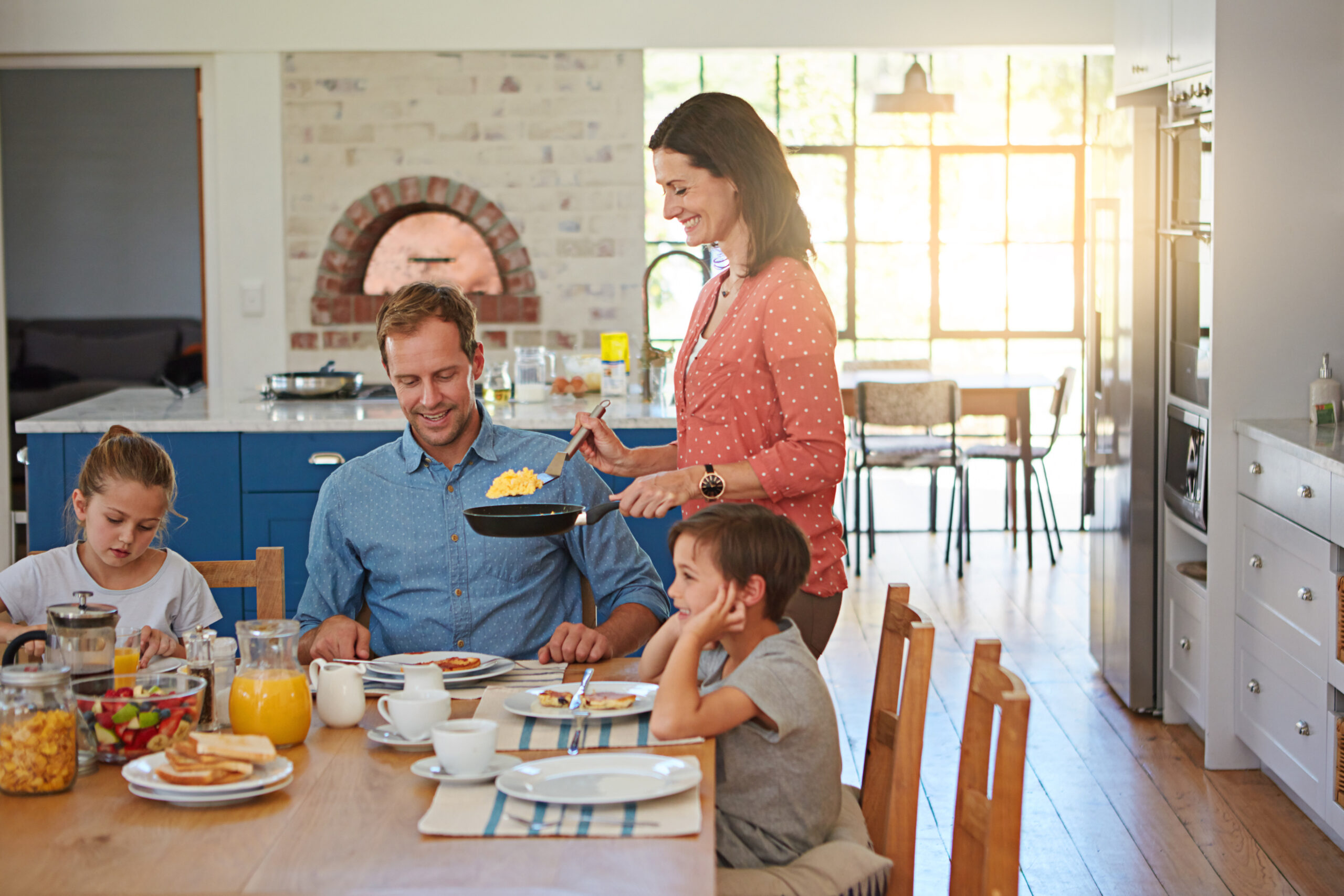
Every family has gathering places, the specific spots in a home where people naturally come together, drawn by comfort, light, warmth, or simple habit. In the homes that work best, these places aren’t random. They’re the product of spatial decisions that make certain areas more inviting, more central, more naturally connected to the flow of daily life.
The kitchen island that becomes the homework spot, the conversation hub, the place where everyone ends up regardless of what meal is being prepared. The window seat that catches the afternoon sun and becomes the reading corner for every child who grows up in the house. The covered porch that extends the season, making outdoor gathering possible in conditions that would otherwise push everyone inside.
We design these gathering places deliberately. We think about what makes a space magnetize people: the combination of warmth, light, prospect, and connection to adjacent activity that makes a spot feel like the right place to be. And we make sure every home we design has at least a few of them: places the family will discover and claim, where the daily ritual of being together will accumulate into something that feels, over time, like the character of the home itself.
One project near Woodstock stays with us as an example of how consequential these decisions can be. The clients were a family with three children ranging from grade school to high school age, and what they kept describing in our early conversations was a desire for a home where the kids would actually want to be not retreating to their rooms the moment they came home from school, but staying in the shared spaces, present and connected. We designed a main living area with a large, low island at the center low enough to feel casual, large enough to spread out homework across and positioned it so that it faced both the kitchen and a window seat that caught the late afternoon light. The kitchen opened completely to this space, so a parent cooking was never out of the conversation. The first time we visited after they’d moved in, all three kids were at that island at four in the afternoon. The parents told us they’d started calling it the heartbeat of the house.
That outcome wasn’t luck. It was the result of listening carefully to what the family needed and designing a space that made the behavior they wanted more likely every single day.
The Role of Natural Materials in Emotional Architecture
A home that holds a family well over decades isn’t just well-planned. It’s built from materials that age honestly and beautifully, materials that absorb the life lived inside them and become more themselves over time rather than showing wear as failure.
This is one of the reasons we work so consistently with natural materials in our projects across the Hudson Valley and Ulster County. Stone, wood, brick, lime plaster. These are materials that have a depth and warmth that manufactured surfaces rarely match, and they respond to time in ways that feel right rather than wrong. The wide-plank oak floor that develops a patina from decades of family life. The exposed timber beam that holds the light differently in different seasons. The stone threshold at the entry that has been crossed ten thousand times and shows it in the best possible way.
There’s also an honesty to natural materials that resonates with how we think about family life. Families are not pristine. Children spill things, dogs scratch floors, furniture gets moved and rearranged and occasionally damaged. A home built from materials that can absorb this reality that develops character rather than damage is a home that lets a family live freely inside it, without the low-level anxiety that comes from trying to preserve surfaces that weren’t designed to be lived on hard.
We source materials regionally wherever possible. The Hudson Valley and the broader upstate New York region have a rich tradition of building with local stone, locally milled timber, and brick from regional manufacturers. Using these materials connects a home to its landscape in a way that’s both aesthetically right and ecologically responsible. It also produces buildings that belong here that look like they grew from this particular piece of land rather than having been imported from a catalog.
ArchDaily’s coverage of residential architecture and material authenticity consistently highlights the relationship between material honesty and long-term emotional resonance in home design, the idea that the homes people love most over time are the ones built from materials that reward prolonged acquaintance. We’ve found the same thing in our own practice, project after project.
Light, Time, and the Memory of a Place
Ask someone to describe their childhood home, and they’ll almost always describe it in terms of light. The way the afternoon sun came through the kitchen window. The quality of winter light in the living room on a Sunday morning. The dappled shade on a back porch at a certain time of day. Light is how we experience space most fundamentally, and it changes everything it touches: the apparent warmth of a room, the sense of time passing, the feeling of connection to the natural world outside.
We treat light as a design material with the same intentionality we bring to stone or wood or glass. We study how the sun moves across each site throughout the year. We think about which rooms want morning light and which want afternoon light. We position windows not just for views but for the specific quality of illumination they’ll produce at the times of day the room is most used.
A bedroom that catches the early morning sun feels like a gift on a winter day in the Hudson Valley. A kitchen with northern light is steady and cool and color-true, perfect for cooking and food preparation. A living space with southern exposure gets free solar heat all winter while, with the right overhang proportions, staying comfortable in summer. These aren’t decorative considerations, they’re functional ones that shape the daily experience of the home profoundly and that create the specific, irreproducible light conditions families carry with them long after they’ve moved on.
In our work on sustainable architecture in Kingston NY and throughout the broader region, light quality is one of the things clients most consistently mention when they describe what makes their homes feel right. It’s also one of the things that’s most difficult and expensive to correct after the fact. A window in the wrong place, a room with no access to natural light, a hallway that’s permanently dim; these are problems that live with you for the life of the building. Getting light right requires decisions made early, before the plan is locked.
Designing for Every Stage of Family Life
A home designed only for the family as it exists today is a home that will feel wrong in ten years. Families change. Children grow up and leave, and then sometimes come back. Aging parents move in. Grandchildren arrive. The way a household uses space evolves continuously, and the homes that serve families best over the long arc are the ones designed with that evolution in mind.
We discuss this explicitly with every new client not to overwhelm them with hypotheticals, but to ensure the home we design has the flexibility to grow and shift with them over time.
A bedroom that works as a guest room today might need to function as a home office in five years and as a space for an aging parent in fifteen. A playroom that’s essential when children are young might become a teenager’s retreat, and then a home studio, and then a grandchild’s room. Designing these spaces with appropriate size, natural light, and acoustic separation rather than treating them as residual square footage to be filled means they can serve multiple purposes over time without requiring costly renovation.
We also think about accessibility from the beginning. Wider doorways, single-floor living options, bathroom configurations that can accommodate future modifications, these decisions cost very little when incorporated at the design stage and enormously when retrofitted later. Building them in is simply good long-view design, and it’s the kind of thinking that allows a home to serve a family across generations rather than requiring reinvention every decade.
The energy-efficient house plans we develop reflect this same long-view philosophy. A home built to a high performance standard with a durable envelope, quality materials, and right-sized mechanical systems is a home that will serve multiple generations without major reinvestment. Several members of our team hold PHIUS Certified Passive House Consultant and Certified Passive House Tradesperson credentials, and one of the things those standards demand is precisely this kind of long-term thinking: buildings designed not for a moment but for a lifetime, and built to perform that lifetime without compromise.
Acoustic Comfort and the Privacy a Family Needs
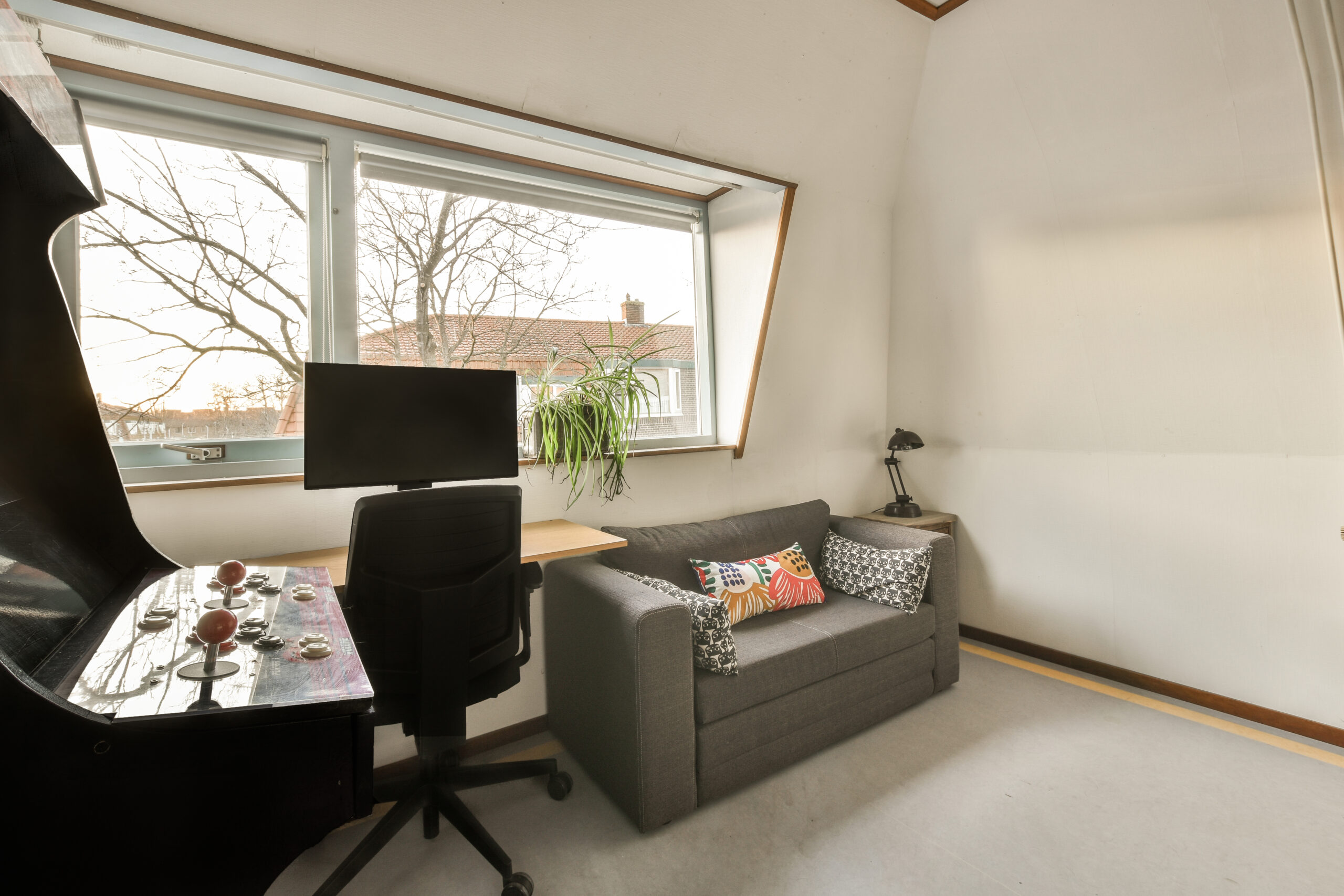
No home can hold a family well if it doesn’t also give each member of that family the privacy and quiet they need to restore themselves. Togetherness is the goal, but togetherness only works when it’s chosen when the alternative of genuine solitude and quiet is genuinely available.
Acoustic design in residential architecture is one of the most underappreciated contributors to family wellbeing. A home where you can hear every conversation from the adjacent bedroom, every footfall from the floor above, every sound from the mechanical room that home is exhausting to live in, even if you can’t quite name why.
We think about acoustic separation from the very first floor plan sketches. Where the bedrooms are relative to the main living areas. Whether the home office has enough separation from the children’s play space to make focused work possible. How the mechanical systems are located and detailed to run quietly in the background. Whether partition walls between bedrooms are built with the acoustic mass and decoupling to give each room genuine privacy.
These decisions require intention, and they require an architect who considers them worth the time because they don’t photograph, they don’t appear in listing descriptions, and they don’t make it onto mood boards. But they show up every day, in the quality of sleep a child gets in a well-separated bedroom, in the focus a parent finds in a properly isolated home office, in the ease of a family that can be together and apart in a home that makes both genuinely possible.
What Our Clients Tell Us Years Later
The feedback we value most comes not at the completion of a project but a year or two later, when the novelty has worn off and the home has settled into the rhythms of daily life.
A couple in Kingston told us that their adult children who had grown up elsewhere and had no particular attachment to the Hudson Valley had started visiting more frequently since the new house was built. The guest room has its own bathroom and private garden access. The kitchen is large enough to cook together. The porch where they could sit in the evening without being on top of each other. The house, they said, had become a reason to come back.
A family near Saugerties told us, two years after moving in, that the thing they hadn’t anticipated was how much the house made them want to be home. Not just comfortable, actively drawn back. They described it as a home that fit them, the same way a well-made piece of clothing fits. Nothing pulling, nothing chafing, nothing that required adjustment. Just ease.
These outcomes aren’t accidental. They’re the result of a design process that took the time to understand how those particular families actually lived, and then built spaces around that understanding with care and precision.
Hudson Valley Magazine’s reporting on residential life and real estate in the region consistently reflects what we hear from our own clients: that the homes people love most are the ones that feel made for them. Not optimized for resale or designed to impress visitors, but shaped around the specific, irreplaceable texture of a particular family’s life together.
The Process Behind the Result
The kind of design we’ve been describing: specific, empathetic, life-centered doesn’t happen by accident or by formula. It requires a process that prioritizes understanding before designing, that stays engaged through construction, and that never loses sight of the people the building is being made for.
As a modern home architect Hudson Valley practice, we work through a fully custom design process for every project. We don’t adapt stock plans. We don’t apply a signature aesthetic regardless of the client or the site. We begin with listening, move through a rigorous programming and design development process, and produce construction documents detailed enough to be built from with precision and without ambiguity.
We work within the Design-Bid-Build model, which keeps our relationship with the owner clean and independent throughout construction. We review submittals, visit the site at key milestones, answer contractor questions, and verify that what’s being built matches what was designed because the gap between design intent and construction reality is where quality either gets preserved or quietly lost. Our independence from the contractor means we can make those calls honestly, without any competing financial interest.
The U.S. Department of Energy’s residential building performance guidelines reinforce what we’ve learned from years of practice: that the homes that perform best over time thermally, structurally, and in terms of the wellbeing of the people inside them are the ones where design and construction were both taken seriously, and where someone was paying attention all the way through.
Because the finish line isn’t the completion of the drawings. It’s the moment a family moves in and the home begins to do what it was designed to do: hold them, shape their days, accumulate their moments, and become, over years and decades, the place they’ll always want to come back to.
Thinking about your own project? Let’s talk. Reach out at wrightarchitectspllc.com.
Have a site you’re considering? We’d love to see it.
Reach out to us if you’re ready to explore what’s possible on your land.