Designing a home in upstate New York isn’t just a creative exercise, it’s a reckoning with reality. The winters are long, the summers are humid, the soils shift, and the building codes vary by municipality. If you’re planning a new home in the Hudson Valley or Ulster County, the decisions you make on paper will shape how comfortable, affordable, and livable your home is for the next fifty years. That’s not a small thing.
At Wright Architects, we’ve spent years working through exactly these challenges alongside our clients, from steep, wooded hillside sites near Kingston to open meadow parcels in the mid-Hudson region. What we’ve learned is that energy efficiency isn’t a feature you bolt on at the end. It’s a philosophy you build the entire design around, from the very first sketch.
Why Upstate New York Demands a Different Approach
Most energy-efficient house plans you’ll find online were designed for milder climates. They look beautiful. They’re well-organized. And they may perform reasonably well in the Mid-Atlantic or the Pacific Northwest. But Upstate New York, particularly the Hudson Valley, sits in IECC Climate Zone 5 and 6 territory. That means heating loads are significant, freeze-thaw cycles stress building assemblies hard, and you can’t afford to guess wrong on insulation, air sealing, or mechanical systems.
We talk about this with every new client. The land here is stunning, the communities are rich with history, and the lifestyle is genuinely worth designing for. But the climate is unforgiving if you treat it casually. Snow loads, wind-driven rain, ice damming, ground frost depths, these aren’t abstractions. They’re site conditions we account for in every set of drawings we produce.
Our Hudson Valley residential architecture practice was built around this understanding. We don’t import generic plans. We design from the land up.
What “Energy-Efficient” Actually Means Here
The term gets used loosely in real estate and construction marketing. For us, energy efficiency has a precise meaning tied to measurable performance outcomes:
Thermal envelope quality — how well the walls, roof, windows, and foundation resist heat loss and unwanted heat gain.
Air tightness — how effectively the building is sealed against uncontrolled infiltration, which in cold climates is one of the single largest sources of energy loss.
Mechanical system efficiency — how intelligently heating, cooling, and ventilation systems are sized and integrated with the building design.
Orientation and passive solar gain — how the home is positioned on the site to take advantage of the sun in winter and minimize overheating in summer.
Thermal mass and material choices — how the materials inside the home absorb and release heat, reducing the burden on mechanical systems.
When all five of these work together, something remarkable happens: the home becomes quieter, more comfortable, less drafty, and dramatically cheaper to operate. It also lasts longer, because well-detailed building assemblies resist moisture, mold, and structural degradation.
The U.S. Department of Energy’s Green Building Guidelines lay out the science behind these principles clearly and are worth reviewing if you want to understand the performance standards we work toward.
Our Design Process: Where Efficiency Starts
We want to be transparent about how we work, because the process matters as much as the outcome.
When a new client comes to us with a site and a vision, we don’t start with floor plans. We start with questions. What’s your daily routine? Do you work from home? Do you have kids, aging parents, visiting family? How do you cook? Do you prefer bright, open spaces or cozy, contained rooms? Do you want to see the mountains or the treeline or the stream?
Then we look at the land. We study the topography, the solar exposure, the prevailing winds, the drainage, the setback requirements, the septic constraints, the local zoning. We look at utility access and ask whether grid connection, solar, geothermal, or a hybrid approach makes the most sense for your situation.
Only after all of that do we begin developing the architectural program, the organized list of spaces, their sizes, their relationships to each other, and their connection to the outdoors. The energy-efficient house plans we develop emerge from this program, not before it. This is how you avoid the expensive mistake of falling in love with a floor plan that doesn’t actually work for your life or your land.

Passive House: Our Highest-Performance Standard
Several members of our team hold PHIUS Certified Passive House Consultant and Certified Passive House Tradesperson credentials. This matters because Passive House, the building performance standard, not a style, represents the most rigorous and well-tested approach to energy-efficient residential design in cold climates.
A PHIUS-certified Passive House uses approximately 40–60% less energy than a code-compliant home. It achieves this not through expensive gadgetry, but through discipline: exceptional insulation levels, continuous air barriers, high-performance triple-pane windows, and a heat recovery ventilation system that brings fresh air into the home while capturing the energy from exhaust air before it leaves.
We’ve worked through the certification process on projects in the Hudson Valley and understand the local material supply chain, the subcontractor community, and the inspection requirements that come with it. We’ve also learned where the process can be adapted thoughtfully for clients who want Passive House-level performance without pursuing formal certification, a path that makes sense for some budgets and timelines.
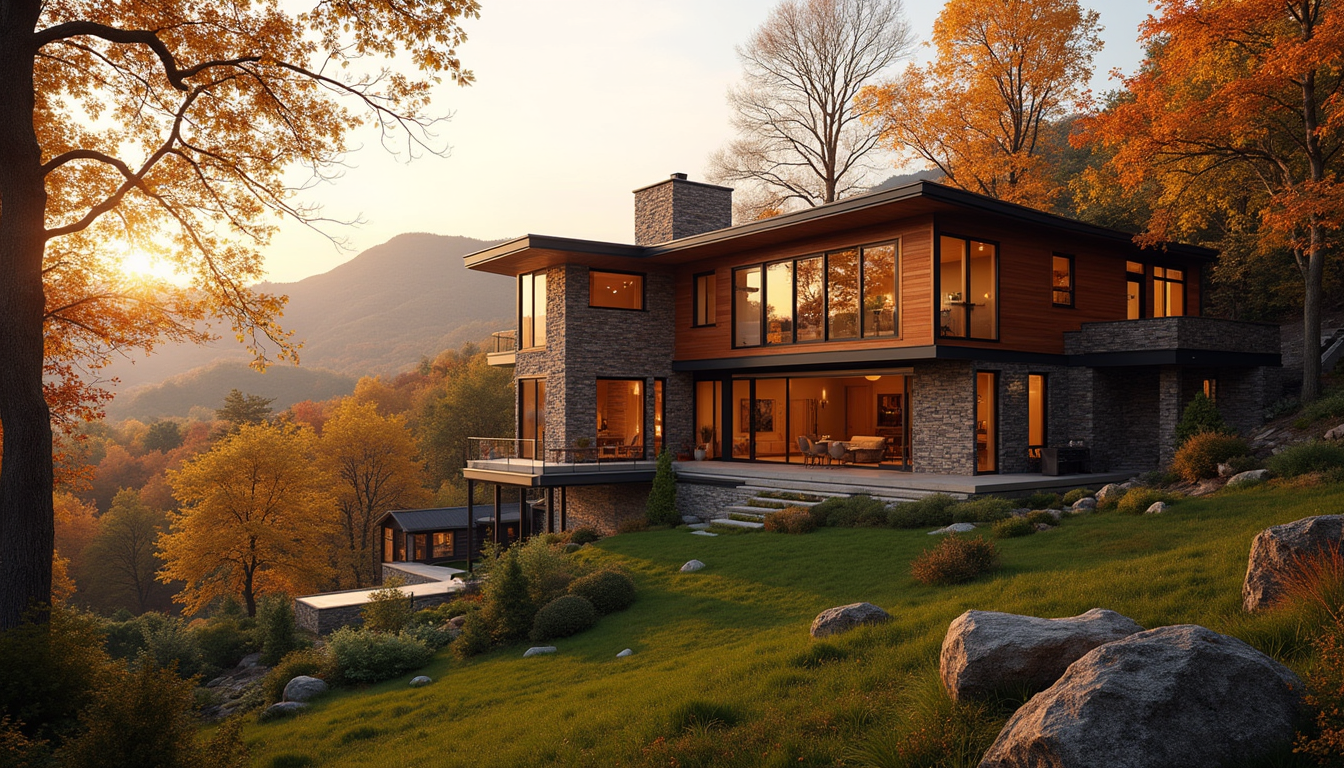
One project that stayed with us: a client came to us with a wooded parcel in Ulster County and a very clear ask, they wanted a home that would be net-zero ready, that their grandchildren could inherit, and that would feel warm and rooted in the landscape, not like a spaceship dropped into the forest. We designed a compact, well-oriented home with a super-insulated wall assembly, a sealed crawlspace, triple-pane windows on the south and west elevations, and a ground-source heat pump paired with a heat recovery ventilation system. The home performed beautifully in its first winter, and the clients told us they’d gone months without thinking about their heating bill for the first time in their lives.
Design-Build vs. Design-Bid-Build: What You Should Know
One of the most important decisions you’ll make, and one that few architects take the time to explain honestly, is how your project will be delivered.
Design-Bid-Build is the traditional model. The architect designs the building completely, produces a full set of construction documents, and then you (or the architect, on your behalf) solicit bids from general contractors. You select a contractor, sign a separate construction contract, and the project proceeds. The architect typically stays involved during construction to observe and answer questions.
Design-Build is a model in which design and construction are managed under one contract, often with a single firm that handles both. It can be faster and more cost-contained in some contexts, but it can also reduce the checks and balances that protect owners.
We operate as a fully custom custom home design services firm under the Design-Bid-Build model, and we’re transparent about why: we believe your interests are best protected when your architect is working for you, not for the contractor. We maintain that independence throughout the project, from schematic design through construction administration. We review contractor submittals, visit the site regularly, and flag anything that doesn’t match the drawings or the spirit of the design.
That said, we collaborate closely with the builders we trust in the region. We’ve developed working relationships with contractors who understand high-performance construction — who know how to detail an air barrier properly, who don’t cut corners on window installation, and who call us before they improvise. Those relationships are genuinely valuable and we work to maintain them.
What Good Energy-Efficient Design Looks Like in Practice
Let’s make this concrete. Here are the key design and construction decisions we think about on nearly every project in the Hudson Valley:
Wall assemblies. In our climate, a code-minimum 2×6 wall with R-20 insulation isn’t enough if you’re aiming for real performance. We typically detail walls with continuous exterior rigid insulation, polyisocyanurate, mineral wool, or graphite-enhanced EPS depending on the project, added outside the structural sheathing. This eliminates thermal bridging through studs and dramatically improves the effective R-value of the wall system.
Roof and attic. Ice damming is a real problem in upstate New York, and it’s almost always caused by heat escaping through an under-insulated attic and melting snow that refreezes at the eaves. We detail roofs with either dense-pack insulation in unvented assemblies or generous attic insulation with proper air sealing at every penetration. We don’t trust air sealing to the framing crew alone, it gets detailed in the drawings and specified in the scope.
Windows. Triple-pane windows are worth the investment in this climate. We specify them on nearly every project where the budget allows. Beyond the glass unit itself, we pay close attention to installation, the rough opening details, the flashing, the air sealing at the window-to-wall joint. A great window poorly installed performs like a mediocre window.
Foundation. In new construction, we typically design with either a conditioned basement or a sealed crawlspace with exterior or under-slab insulation. We avoid vented crawlspaces in this climate, they introduce moisture problems, pest entry points, and significant heat loss.
Mechanical systems. We work closely with mechanical engineers and energy consultants to right-size HVAC systems. Oversized systems are one of the most common performance problems in residential construction, they short-cycle, they don’t dehumidify properly, and they cost more to operate. A well-sealed, well-insulated home in the Hudson Valley often needs significantly less mechanical capacity than builders assume.

Local Materials and the Hudson Valley Aesthetic
Efficiency doesn’t have to mean sterile or impersonal. Some of the most beautiful homes we’ve designed are also the most energy-efficient, because the same discipline that drives good building science also produces honest, purposeful architecture.
We often incorporate locally sourced stone, reclaimed timber, and regionally manufactured wood products into our designs. These materials connect the home to its landscape, reduce embodied carbon in the supply chain, and tend to age beautifully in the Hudson Valley’s variable climate. There’s something right about a home built from the same geology that shaped the hills it sits in.
We also think carefully about fenestration, the placement, proportion, and orientation of windows, as both an aesthetic and performance decision. South-facing glass captures winter sun. North-facing glass loses heat without much gain. East and west exposures need careful shading design to avoid summer overheating. Getting this right is one of the things that separates a truly site-specific design from a plan that’s been dropped on your lot without real thought.
ArchDaily’s coverage of sustainable design consistently highlights how the best energy-efficient homes don’t sacrifice beauty for performance, they find the two working together.
Working With Local Permitting and Regulation
One thing we always tell new clients: the permitting landscape in the Hudson Valley is not uniform. Ulster County municipalities vary significantly in their zoning codes, building department capacity, and review timelines. Kingston has a different process than Woodstock. Saugerties moves differently than New Paltz.
We’ve worked through permitting in most of the municipalities in our region and we know who to call, what to prepare, and how to sequence the process to minimize delays. For energy-efficient construction in particular, there are sometimes questions that arise during plan review about non-standard assemblies, unusual wall configurations, unvented roofs, or unfamiliar mechanical systems. We document our work carefully and communicate proactively with building departments to smooth those conversations.
Septic, well, and site work permits add another layer of coordination, especially on raw land. We can help you think through the sequencing of approvals and connect you with the surveyors, engineers, and environmental consultants who do good work in this region.
What Does This Kind of Home Cost?
We’ll be honest, because we think you deserve that: high-performance residential construction costs more upfront than standard code construction. The materials are more expensive. The detailing is more exacting. The labor requires more skill and care.
But the framing is important. The cost premium for Passive House-level construction, depending on project size, complexity, and site, typically runs 5–15% above conventional construction. Over a 30-year mortgage, the energy savings often more than offset that premium. And the comfort, durability, and indoor air quality benefits are not trivial. Clients who have lived in high-performance homes consistently tell us they wouldn’t go back.
We also point out that mechanical systems in a well-insulated, well-sealed home can be significantly smaller and less expensive than in a leaky, under-insulated home. Some of that first-cost premium gets recovered in smaller HVAC equipment, smaller duct systems, and sometimes smaller utility service connections.
We’re not going to promise a specific number without understanding your project. But we will tell you that we’ve designed energy-efficient house plans across a wide range of budgets, and we’ve learned how to prioritize the decisions that deliver the most performance per dollar.
Real Estate Trends and the Value of Energy Performance
The Hudson Valley real estate market has shifted meaningfully over the past several years. Buyers, particularly those relocating from New York City, are increasingly asking about energy performance, solar readiness, and indoor air quality. Hudson Valley Magazine’s reporting on local real estate trends has reflected this shift, noting that buyers are paying closer attention to operating costs and long-term livability than in previous cycles.
For residential developers and builders reading this: energy-efficient construction is increasingly a market differentiator, not just a compliance exercise. Homes that can demonstrate lower energy bills, better air quality, and higher durability are finding receptive buyers, and in some cases commanding meaningful premiums.
For individual homeowners: the home you build now will be the home you sell someday. The choices you make about insulation, windows, and mechanical systems will show up in your utility bills every month and in your home’s appeal to future buyers.
The Questions We Hear Most Often
Can I retrofit my existing home for energy efficiency? Yes, and we’ve done it. Deep energy retrofits, adding exterior insulation, replacing windows, upgrading mechanical systems, air sealing from the inside, are technically complex but very achievable. They require careful sequencing to avoid moisture problems, and they often surface other issues (old wiring, deteriorated framing, inadequate ventilation) that need to be addressed alongside the energy work. We approach retrofits with the same care and documentation discipline as new construction.
Is solar worth it in Upstate New York? Often yes, especially when paired with a well-insulated building envelope that reduces the total energy load. The math depends on your roof orientation, shading, utility rates, and available incentives. The federal investment tax credit and New York State programs make solar more accessible than it’s ever been. We design homes to be solar-ready even when clients aren’t installing panels at construction, it’s a modest investment in future flexibility.
How long does the design process take? For a custom home in our region, the design process typically runs 6–12 months from initial engagement through construction documents, depending on complexity and permitting timelines. We don’t rush it. Getting the design right, really right, before construction starts is the single most cost-effective thing you can do on a building project.
Do you work with owner-builders? Selectively. Owner-builders often have tremendous passion and commitment, and we’ve had rewarding collaborations with clients who wanted to take on significant portions of their own construction. We’re honest about where the risks lie and where professional oversight is particularly important.
What We Stand For
As a modern home architect Hudson Valley practice, we’ve built our reputation on designing homes that are genuinely responsive to the land, the climate, and the people who will inhabit them. We don’t believe in signature styles or architectural ego. We believe in listening carefully, designing honestly, and building relationships that last well past the ribbon cutting.
We care about the Hudson Valley, its ecology, its communities, its built heritage, and its future. The homes we design are meant to belong here, to age well here, and to serve the people who live in them for generations.
If you’re thinking about a new home, a major addition, or a deep energy retrofit in the Hudson Valley or Ulster County area, we’d love to hear about your project and your land.
Thinking about your own project? Let’s talk. Have a site you’re considering? We’d love to see it.
Reach out to us if you’re ready to explore what’s possible on your land.