
Most people understand, at least in general terms, what an architect does during the design phase of a project. They listen, they sketch, they develop drawings, they produce the documents that describe what a building should be. That part of the story is familiar enough.
What’s much less understood, and what we think deserves a much more honest conversation, is what an architect does during construction. Or rather, what a good architect does during construction, because the range of practice here is wide. Some architects hand over the drawings and step back. Others stay deeply engaged through every phase of the build, reviewing submittals, visiting the site, answering contractor questions, and protecting the integrity of the design all the way to the final walkthrough.
We proudly fall firmly in the second camp. And we want to explain why, because we think it matters enormously to the quality of what gets built, and because clients who understand what construction administration actually involves are clients who can advocate for their own interests more effectively throughout the process.
The design phase produces a vision. The construction phase is where that vision either gets realized or quietly compromised, one substitution and one shortcut at a time. Having an architect who is present, engaged, and working for you during construction isn’t a luxury. In our experience doing Hudson Valley residential architecture, it’s one of the most important protections a client can have.
Here’s what that presence actually looks like in practice.
What Construction Administration Actually Is
Construction administration, or CA in architectural shorthand, is the formal phase of architectural service that covers the period from the start of construction through substantial completion of the building. It’s distinct from the design phases that precede it, and it involves a specific set of activities that are worth naming clearly.
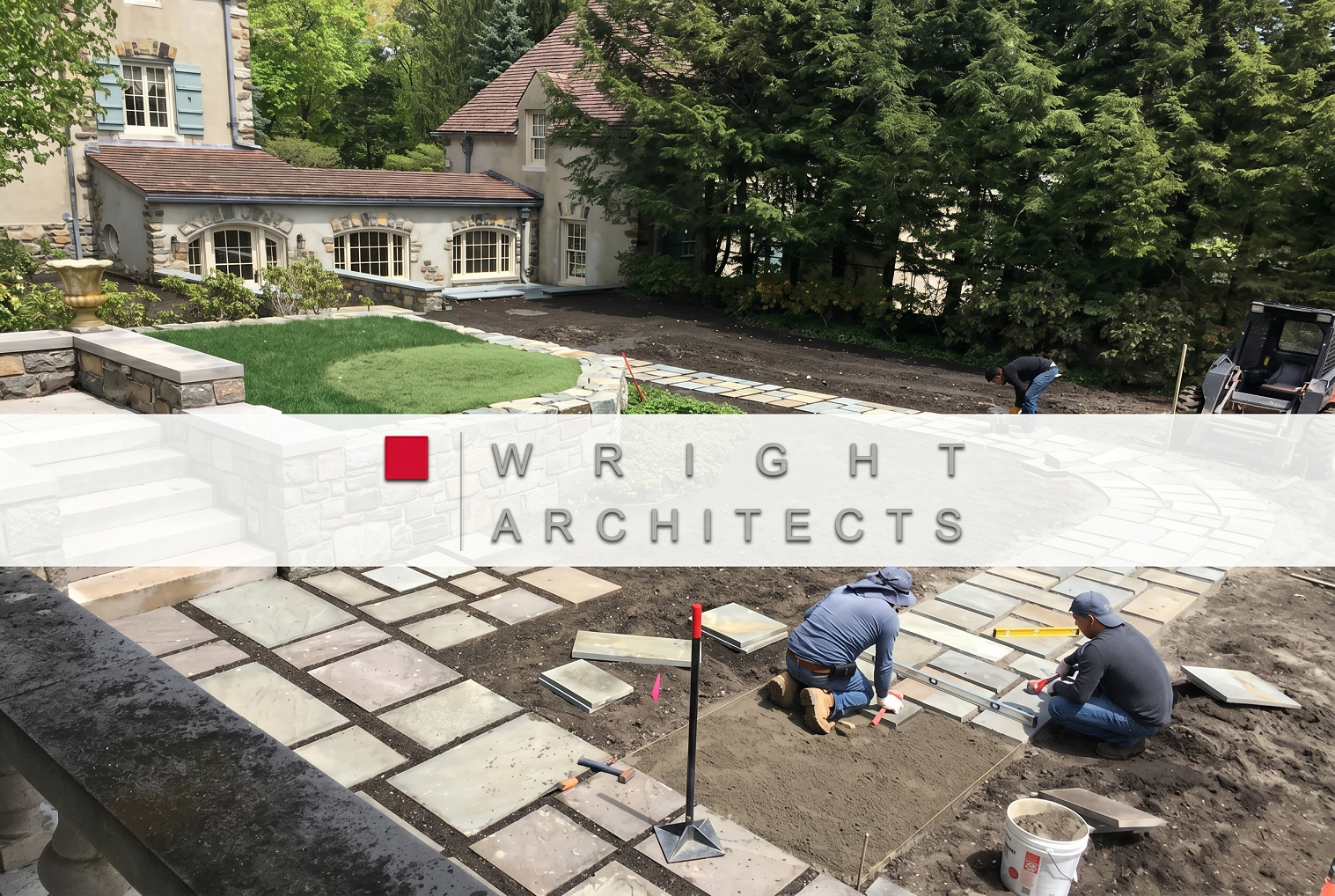
Site visits. The architect makes regular visits to the construction site to observe progress, verify that work is being executed in conformance with the contract documents, and identify any conditions that require attention. These aren’t social calls, they’re technical observations, and they’re documented.
Submittal review. Before contractors install materials or systems, they’re required to submit product data, shop drawings, and samples for the architect’s review. The architect checks these against the specifications and drawings to confirm that what’s being proposed matches what was designed.
RFI responses. Requests for Information are questions from the contractor about the drawings or specifications, places where something is unclear, where field conditions don’t match the drawings, or where the contractor needs a decision before work can proceed. The architect reviews each RFI and provides a written response that becomes part of the project record.
Change order review. When conditions in the field require a change to the contract, a substituted material, an unforeseen site condition, an owner-requested modification, that change is formalized through a change order. The architect reviews proposed change orders for conformance with the design intent and fair pricing.
Pay application review. The contractor submits periodic pay applications requesting payment for work completed. The architect reviews these against the actual progress observed on site and certifies the amounts that are appropriate to release.
Substantial completion. Near the end of construction, the architect conducts a detailed inspection of the completed work, produces a punch list of items to be corrected or completed, and ultimately certifies that the project has reached substantial completion, the point at which it’s sufficiently complete for the owner to occupy it.
Each of these activities serves the owner’s interests. Together, they constitute a system of checks that protects the design quality, the budget, and the schedule throughout the construction process.
Why the Drawings Are Never the Whole Story
We want to be honest about something that architectural schools teach but that clients don’t always hear: even the most complete set of construction drawings cannot anticipate every condition that will arise during construction. Buildings are complex. Sites are variable. The gap between what’s drawn and what’s encountered in the field is sometimes small and sometimes significant, and navigating that gap well requires judgment, experience, and a genuine understanding of the design intent.
Here’s a straightforward example. On a project we worked on in Ulster County, the foundation excavation revealed a ledge of bedrock at a depth that hadn’t been detected in the soil borings. The original foundation design called for spread footings at a specific depth that the rock made impossible to achieve in one corner of the building. The contractor needed a decision quickly, crews were on site, equipment was running, and delays are expensive.
A contractor working without active architect involvement might have simply improvised a solution that worked structurally but changed the spatial relationship of the basement level to the grade in a way that would have affected the entry sequence and a below-grade window we’d designed carefully for light quality. With us on the phone within the hour and on site the following morning, we worked through a modified footing design that addressed the rock condition while preserving the design intent. The change was documented, the cost implications were clear, and the building ended up exactly as designed.
That kind of fast, informed response requires an architect who knows the project intimately, not just the drawings, but the reasoning behind every decision. It’s one of the reasons we stay engaged. The drawings capture what we decided. Our presence during construction preserves why we decided it, and makes sure the field execution honors both.
Submittal Review: Where Substitutions Get Caught
One of the most important functions of construction administration is submittal review, and it’s one that clients rarely hear about because it happens in the background of the project.
When a contractor prepares to install a window system, a mechanical unit, a roofing assembly, or virtually any other specified product, they submit documentation, manufacturer cut sheets, shop drawings, samples, for the architect’s review before ordering and installation. The architect’s job is to verify that what’s being proposed matches what was specified, or if a substitution is being proposed, to evaluate whether it’s genuinely equivalent.
In high-performance construction, this review is especially consequential. The energy-efficient house plans we develop for projects in the Hudson Valley depend on specific performance characteristics, window U-values, air barrier continuity, insulation R-values, vapor permeability of wall assemblies, that can be quietly undermined by substitutions that look similar on paper but perform differently in the field.
We’ve reviewed submittals where a contractor proposed a window unit with a U-value meaningfully higher than specified, not dramatically so, but enough to affect the thermal performance of the envelope and the energy modeling that determined the mechanical system sizing. We’ve seen air barrier products substituted for alternatives that were cheaper but had different vapor permeability characteristics that could have caused moisture problems in our climate.
In neither case was the contractor acting in bad faith. They were solving a procurement problem, lead time, cost, availability, in the way that made sense from their perspective. Our job is to evaluate those solutions from the building’s perspective and the owner’s interests, and to either approve them with confidence or require revision.
Without that review, substitutions slip through. They compound. The building that gets built drifts from the building that was designed, and the drift is often invisible until it shows up as a performance problem years later.

Site Visits: What We’re Actually Looking For
We make site visits at key milestones throughout construction, and the timing of those visits is deliberate. We’re trying to observe work at the moments when it can still be corrected, before it gets covered up by the next layer of construction.
Here’s what that looks like in practice for a high-performance residential project in the Hudson Valley:
Foundation and rough grading. We visit before the foundation walls are backfilled to verify that the sub-slab insulation, the waterproofing, and the foundation drainage are installed correctly. Once the soil goes back, these conditions are inaccessible.
Rough framing completion. Before insulation and air barrier work begins, we walk the framing to verify dimensions, structural member sizes, and the locations of penetrations that will need to be air-sealed. We check window rough openings against the approved submittals.
Air barrier and insulation installation. This is one of the most critical inspection points on any high-performance project. The continuity of the air barrier, every penetration sealed, every connection between assemblies detailed correctly, determines whether the building will perform as designed or leak air at a rate that defeats the insulation investment. We’ve been on site at this stage and found gaps in the air barrier at electrical penetrations, at the top plate of exterior walls, and at the transitions between wall and roof assemblies. All of them were correctable at that stage. None of them would have been visible after drywall.
Window and door installation. We verify flashing sequences, air sealing at rough openings, and threshold conditions. A triple-pane window installed without proper flashing is a water intrusion problem waiting to happen, and water intrusion problems in our climate are serious.
Mechanical rough-in. We verify duct locations, equipment placements, and the integration of ventilation systems with the building envelope before ceilings close.
Pre-drywall walk. A final check before the walls close, looking at blocking locations for future fixtures and built-ins, verifying that all penetrations have been sealed, and confirming that the rough-in work matches the drawings.
Substantial completion inspection. A comprehensive walk of the completed building, producing the punch list and beginning the close-out process.
Each of these visits produces a written observation report that goes to the contractor and the owner. The documentation matters, it creates a record of what was observed, what was required, and what was resolved, which is valuable both during construction and if questions arise later.
Working Within the Design-Bid-Build Model
Our practice operates within the Design-Bid-Build delivery model, and the construction administration phase is where the value of that model is most clearly demonstrated.
In Design-Bid-Build, the architect is the owner’s representative throughout the project, during design and during construction. We have no financial relationship with the contractor. We don’t share in their profit, and we don’t bear their cost overruns. Our only obligation is to the owner and to the integrity of the design.
This independence is genuinely valuable during construction, because the interests of the owner and the interests of the contractor are not always perfectly aligned. The contractor’s interest is in completing the work efficiently and profitably. The owner’s interest is in getting the building that was designed and specified. Most of the time these interests point in the same direction. Occasionally they don’t, and those are the moments when having an independent architect representing the owner matters most.
In Design-Build, the design and construction are managed by a single entity. This can streamline coordination and sometimes reduce schedule on straightforward projects. But it eliminates the independent oversight that protects the owner during construction. When the designer and the builder are the same, the person reviewing the contractor’s work is also the person financially responsible for completing it within budget. That’s a structural conflict of interest, and it tends to resolve itself in favor of the construction budget rather than the design quality.
We’re transparent about this not to disparage the Design-Build model, it has legitimate applications, but because we think clients deserve to understand what they’re getting and giving up in each delivery method. As a modern home architect Hudson Valley practice that operates independently of contractors, we believe our clients are better served by the checks and balances that Design-Bid-Build provides.
High-Performance Construction: Where CA Matters Most
For clients pursuing Passive House certification or near-Passive House performance levels, construction administration isn’t just valuable, it’s essential. The performance targets that define these standards depend on construction quality that cannot be achieved through drawings alone.
Several members of our team hold PHIUS Certified Passive House Consultant and Certified Passive House Tradesperson credentials. These certifications reflect not just knowledge of the design requirements for Passive House buildings, but knowledge of the construction requirements, the sequencing, the detailing, the testing, and the verification that distinguish a Passive House from a well-intentioned but under-performing attempt at one.
Blower door testing is a good example. A blower door test measures the air tightness of a completed building by pressurizing it and measuring the flow rate of air through the envelope. Passive House certification requires achieving a specific air tightness target, typically 0.6 air changes per hour at 50 pascals of pressure or better. Getting there requires meticulous air sealing throughout construction, and the only reliable way to know whether you’ve achieved it is to test.
We conduct blower door testing at two points on Passive House projects: a mid-construction test, performed before the walls close, and a final test at completion. The mid-construction test is the more valuable one, because if the building isn’t meeting the target at that stage, there’s still time to find and address the leakage paths before they’re buried in finishes.
We’ve had mid-construction blower door tests reveal leakage at locations that weren’t obvious from visual inspection, at the top of a partition wall that intersected the exterior envelope, at a recessed light fixture that hadn’t been properly air-sealed, at the connection between a prefabricated structural panel and the site-built framing. All of these were correctable. None of them would have been findable after drywall.
The U.S. Department of Energy’s building performance standards increasingly recognize the importance of construction verification, not just design specification, as a prerequisite for claimed energy performance. A building that was designed to a high standard but built without verification may look compliant on paper while performing significantly below its design intent.

The Human Side of Construction Administration
We want to say something about the relational dimension of construction administration, because it matters as much as the technical one.
Good construction is collaborative. The best outcomes we’ve seen on projects in Ulster County and across the Hudson Valley have come from job sites where the architect, the contractor, and the owner were communicating openly and regularly, where problems were surfaced early, where decisions were made together, and where everyone understood that the goal was a good building rather than a winning argument.
We try to bring that spirit to every site visit and every RFI response. We’re not on site to find fault with the contractor or to catch them doing something wrong. We’re on site because we care about the building and we want to help it get built right. Most of the contractors we work with understand that, and the relationship is genuinely productive.
That said, we don’t shy away from the conversations that need to happen. If work isn’t conforming to the drawings, we say so clearly and document it. If a proposed substitution doesn’t meet the spec, we require revision. If a contractor is rushing through a detail that needs more care, we flag it. Our obligation is to the owner and to the building, and we take that obligation seriously regardless of whether the conversation is comfortable.
We’ve found that clients who understand what construction administration involves, and who actively support the architect’s role during construction, get better buildings. They understand why we’re asking the contractor to redo a flashing detail. They understand why a blower door test is worth the cost and the schedule time. They understand that the punch list isn’t a formality but a genuine accounting of what the building is owed.
What Happens When CA Is Skipped
We see projects where the architect’s involvement ended at construction documents, and we want to be honest about what that often produces.
It doesn’t always produce a bad building. Sometimes the contractor is experienced and conscientious, the drawings are clear, and the build goes well without active architect involvement. But the risk is real, and the consequences when things go wrong can be significant.
We’ve been brought in after the fact on projects where a window was installed in the wrong rough opening. Where a structural beam was undersized because an RFI never got answered and the contractor made a judgment call. Where an air barrier was installed in a sequence that left the top-plate connection unsealed across the entire perimeter of the building. Where a substituted mechanical system turned out to be incompatible with the duct layout shown in the drawings and had to be re-routed at significant expense.
In each case, the problem was either preventable or much cheaper to fix during construction than after. In each case, the absence of architect involvement during construction was a contributing factor.
ArchDaily’s coverage of construction quality and architectural practice consistently highlights the gap between design intent and construction reality as one of the persistent challenges in residential architecture, a gap that active construction administration directly addresses.
Our Commitment to the Full Project
Our custom home design services are structured to cover the full arc of a project, from the first site visit through the final punch list. We don’t consider a project finished when the drawings are complete. We consider it finished when the building is complete in the way we designed it.
That commitment shapes how we approach every phase of the work. The drawings we produce are detailed enough to build from with clarity. The specifications we write are specific enough to be enforced during submittal review. The site visits we make are timed to catch problems before they’re covered up. The documentation we produce creates a record that protects the owner throughout the project and beyond.
For clients pursuing sustainable architecture in Kingston NY and the surrounding Hudson Valley region, this full-project commitment is especially important. High-performance buildings are only as good as their construction quality, and construction quality requires oversight by someone who understands the design intent and has the independence to enforce it.
Hudson Valley Magazine’s reporting on the region’s residential market reflects a growing sophistication among buyers and builders about what quality construction actually requires. The conversation has shifted from square footage and surface finishes toward durability, performance, and the long-term value of buildings that were built right from the ground up. We think that shift is exactly right, and it’s one we’ve been practicing for years.
Thinking about your own project? Let’s talk. Reach out at wrightarchitectspllc.com.
Have a site you’re considering? We’d love to see it.
Reach out to us if you’re ready to explore what’s possible on your land.