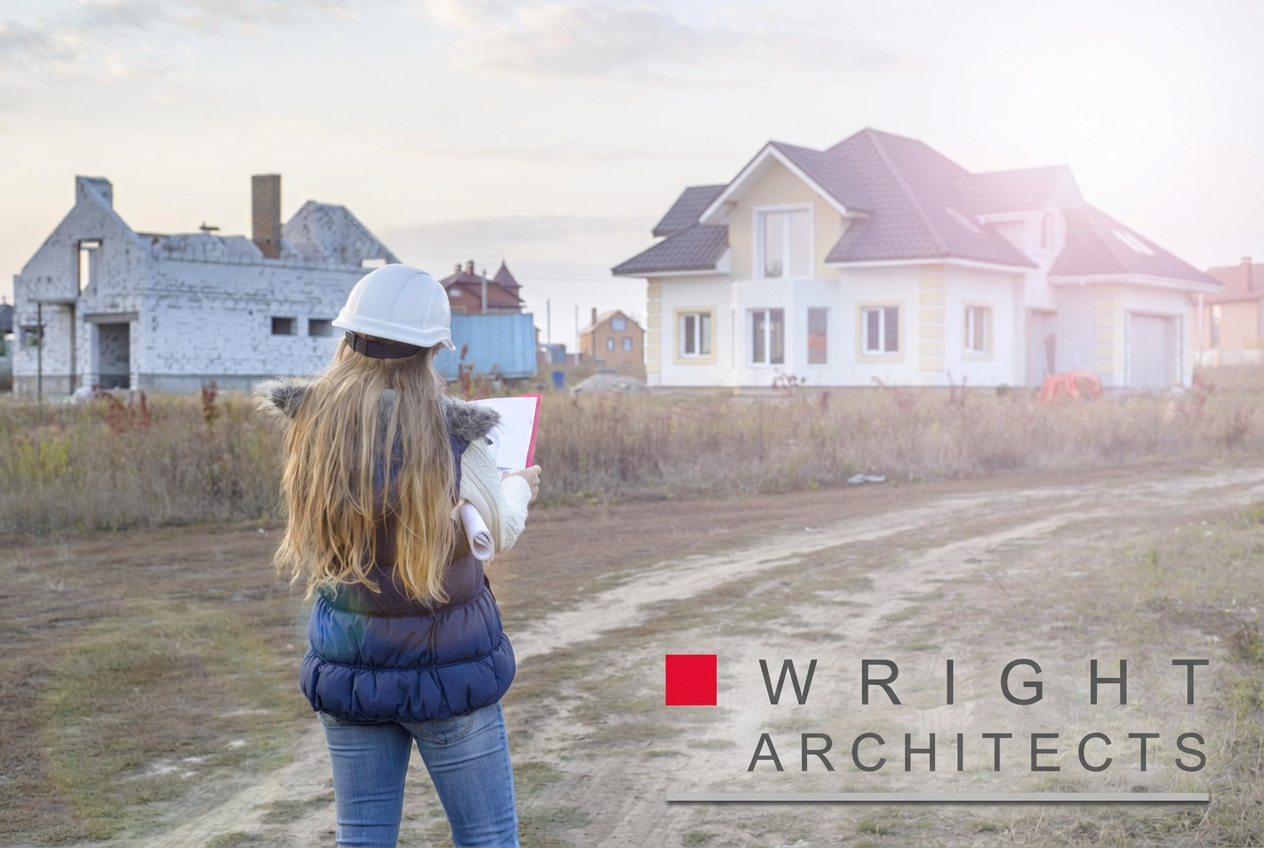
A few years back, we were working with a couple who had purchased a beautiful parcel on a hillside in Woodstock. They came to us with a vision they’d been carrying for years, a big open house, lots of glass facing south, a wide flat lawn stepping down toward the tree line. Clean, modern, exactly what they’d pictured.
The site had other ideas.
The slope was steeper than it looked on the survey. The town had a scenic overlay district that limited rooflines on the ridge. A seasonal stream running along the western edge meant the building footprint had to shift north. And the southern exposure that made the view so beautiful also meant that without careful planning, those big glass walls would turn the house into a greenhouse.
“So we can’t do what we wanted?” they asked at our first site meeting.
“You can do something better,” we told them.
That’s the thing about constraints. When you work with them instead of against them, they stop being obstacles and start being the reason the house is exactly right for where it sits. After 40 years of designing homes across the Hudson Valley residential architecture landscape, we’ve come to see regional limits: zoning rules, terrain, climate, local building codes, not as problems to solve around, but as the raw material of good design.
Why constraints feel like bad news, and why they usually aren’t
When most people hear “constraint” in the context of building a home, they think of things being taken away. You can’t build that high. You can’t place the house there. You’ll need an extra permit for that. It feels like the gap between what you imagined and what you’re allowed to do.
But here’s what we’ve seen play out hundreds of times: the clients who push hardest against local constraints early in a project are often the ones who, years later, are most grateful those constraints existed. The setback that forced the house closer to the ridge gave them a view they wouldn’t have found otherwise. The slope that made a flat lawn impossible led to a terraced design that made the outdoor spaces genuinely more interesting. The permit process that felt like a delay surfaced a site issue that would have been expensive to discover mid-construction.
This isn’t a silver lining story. It’s a design principle. Constraints sharpen thinking. They force choices that a blank slate never would. And in a region as specific as Ulster County and the broader Hudson Valley, they also make sure that new buildings feel like they belong, to the land, to the community, and to the climate.
Do zoning rules and permits really affect how a home is designed?
Yes, significantly. Zoning rules shape where a building can sit on a lot, how tall it can be, and how close it can come to property lines or natural features. In areas like Ulster County, scenic overlays and environmental regulations add another layer. These rules don’t just limit design, they often push it toward solutions that work better for the site.

What the rules are actually telling you about your land
Zoning laws, setback requirements, scenic overlay districts, DEC regulations near waterways, these aren’t arbitrary. They exist because the region has learned, over time, what happens when buildings ignore the land they’re on. And for anyone building a modern home architect Hudson Valley project, understanding what the rules are protecting is often the fastest way to understand what makes your site worth building on.
In Ulster County, scenic overlay districts protect ridgelines and viewsheds that have defined the character of this landscape for generations. When a rule says your roofline can’t break the tree canopy on a ridge, it’s telling you something important: the ridge is the feature. The house should sit below it, nestle into it, or frame it, not compete with it. Some of our most praised projects came directly out of that constraint. The house you didn’t see from the road turned out to be the house that felt most at home in the landscape.
Setback rules near streams and wetlands work the same way. The DEC requires buffers around waterways for real environmental reasons, flood risk, water quality, habitat. But those buffers also tend to keep houses away from the parts of a site that are most dynamic and alive. The result, when you work with it, is a building that sits on the more stable, drier ground while the stream edge remains what it should be: something to look at and walk along, not something to build over.
We’ve worked in municipalities across the Hudson Valley long enough to know how each one moves and what each one cares about. That local knowledge matters. A submission that would sail through in one town might need extra documentation in another. Knowing that before you file, not after, is part of what we bring to every project.
What is a scenic overlay district and how does it affect building in the Hudson Valley?
A scenic overlay district is a local zoning layer that protects the visual character of a landscape, usually ridgelines, hillsides, or areas visible from public roads. In the Hudson Valley, these districts can limit building height, roofline placement, and exterior materials. Working within them often leads to homes that sit more naturally in the landscape than they would have otherwise.
When the land tells you where the house wants to go
Zoning rules are written by people. Terrain and climate are not. And in some ways, they’re the more demanding constraint, because there’s no variance process, no appeal, and no workaround. A north-facing slope is a north-facing slope. A site that collects cold air at the bottom of a valley will always do that. A parcel that loses the sun behind a ridgeline at 3pm in December is going to feel dark in winter, no matter how many windows you add.
This is where our PHIUS Certified Passive House training becomes less about energy performance and more about reading the land. Before we put a building anywhere on a site, we study how the sun moves across it through the year, where the wind comes from, where water collects after a heavy rain, and where the best natural light will be at the times of day the owners care most about. That analysis shapes everything: which direction the house faces, where the main living spaces sit, how big the roof overhang needs to be to let winter sun in while keeping the summer sun out.
The energy-efficient house plans that perform best in this region aren’t designed in spite of the climate, they’re designed because of it. A well-oriented house on a Hudson Valley site can stay warm on a sunny winter day with almost no mechanical help. That same house, oriented wrong by 30 degrees, works against the sun all winter and fights the heat all summer. The difference isn’t the insulation. It’s the decision made in the first week of design about which way the building faces.
Terrain shapes the building in other ways too. A sloped site isn’t a problem to be graded flat, it’s an opportunity to step the building into the hillside, creating natural thermal mass, reducing the visual footprint from the road, and producing outdoor spaces at multiple levels that a flat site could never offer. Some of the most interesting floor plans we’ve ever drawn came directly from a site that seemed, at first glance, too difficult to build on.
The same goes for wooded sites. A lot covered in mature trees might look like it limits where the house can go. It also gives you natural shade in summer, wind protection in winter, privacy without fencing, and a connection to the landscape that takes decades to grow. Working around the trees, siting the house to preserve the best of them, is almost always worth the extra planning.
How does the direction a house faces affect energy use and comfort?
Orientation has a big impact on both. A home with its main living spaces and largest windows facing south receives natural warmth from the sun in winter and, with a properly sized roof overhang, stays shaded in summer. A poorly oriented home works against the sun year-round, requiring more heating in winter and more cooling in summer, regardless of insulation.

The projects that surprised us most were shaped the most by their limits
We want to share a pattern we’ve seen repeat itself over the years, because it’s the clearest way we know to explain why we’ve stopped dreading constraints and started welcoming them.
The projects built on complicated sites tell a different story. A steep lot in the Catskills that forced us to break the house into two connected volumes, stepping down the hillside, became one of the most spatially interesting homes we’ve built, and the owners say it’s the split-level relationship between those volumes that they love most about living there. A narrow parcel in Kingston with tight setbacks on both sides led to a long, linear plan that oriented every room toward a central courtyard garden, creating privacy and light in a way a conventional layout never would have. A site near a protected stream in Rhinebeck, where we couldn’t build within 100 feet of the water, resulted in a house positioned on higher ground with a framed view down to the stream that the owners describe as the best thing about the property.
None of those outcomes were planned. They were found, by taking the constraints seriously and following where they led.
This is at the heart of what we mean by sustainable architecture in Kingston NY and across the broader region. Sustainability isn’t just about materials or energy use. It’s about building in a way that respects and responds to where you are. A house that works with its site lasts longer, costs less to run, and feels more right over time than one that was imposed on the land regardless of what the land was saying. According to ArchDaily’s ongoing coverage of site-responsive design, architects who treat site constraints as generative, rather than merely restrictive, consistently produce work with higher occupant satisfaction and longer functional lifespans.
Can building regulations actually improve the design of a custom home?
They can, and often do. Regulations that limit where a house can sit, how tall it can be, or how it relates to natural features tend to push designers toward solutions that are more specific to the site. The most interesting custom homes we’ve built weren’t designed despite local rules, they were shaped by them in ways that made them more grounded, more considered, and more livable.
What this means when you’re the one buying the land
We want to be straightforward about something, because it matters a lot if you’re in the early stages of a project.
Not every constraint leads somewhere good. Some sites genuinely have more limitations than opportunities. A parcel that’s mostly wetland, or almost entirely within a required setback, or zoned in a way that doesn’t match what you want to build, these are real issues that design alone can’t resolve. One of the most valuable things we do is help people evaluate land before they buy it, not after. Understanding what a site will and won’t support before you’re committed to it is the kind of information that changes decisions.
The other thing worth saying is that navigating constraints takes time and knowledge. Scenic overlay reviews, DEC consultations, variance applications, these processes exist for good reasons, but they move on their own schedule. We’ve been through them enough times to know how to prepare a submission that holds up, how to anticipate the questions that will come back, and how to keep a project moving even when the approvals are pending. That experience doesn’t eliminate the process, but it makes it a lot less stressful to go through.
As Hudson Valley Magazine’s real estate coverage has observed, land values across the region continue to reflect the desirability of constrained, character-rich sites, the ridgeline parcels, the wooded lots, the properties near water. The constraints and the value come from the same place. That’s not a coincidence.
The custom home design services we provide always begin with a serious look at the site, what it allows, what it asks for, and what it might become. That’s not a preliminary step before the real design work. It is the design work. According to the U.S. Department of Energy’s guidance on climate-responsive building, site analysis and orientation decisions made early in a project have a greater impact on long-term energy performance than any single material or system choice made later.
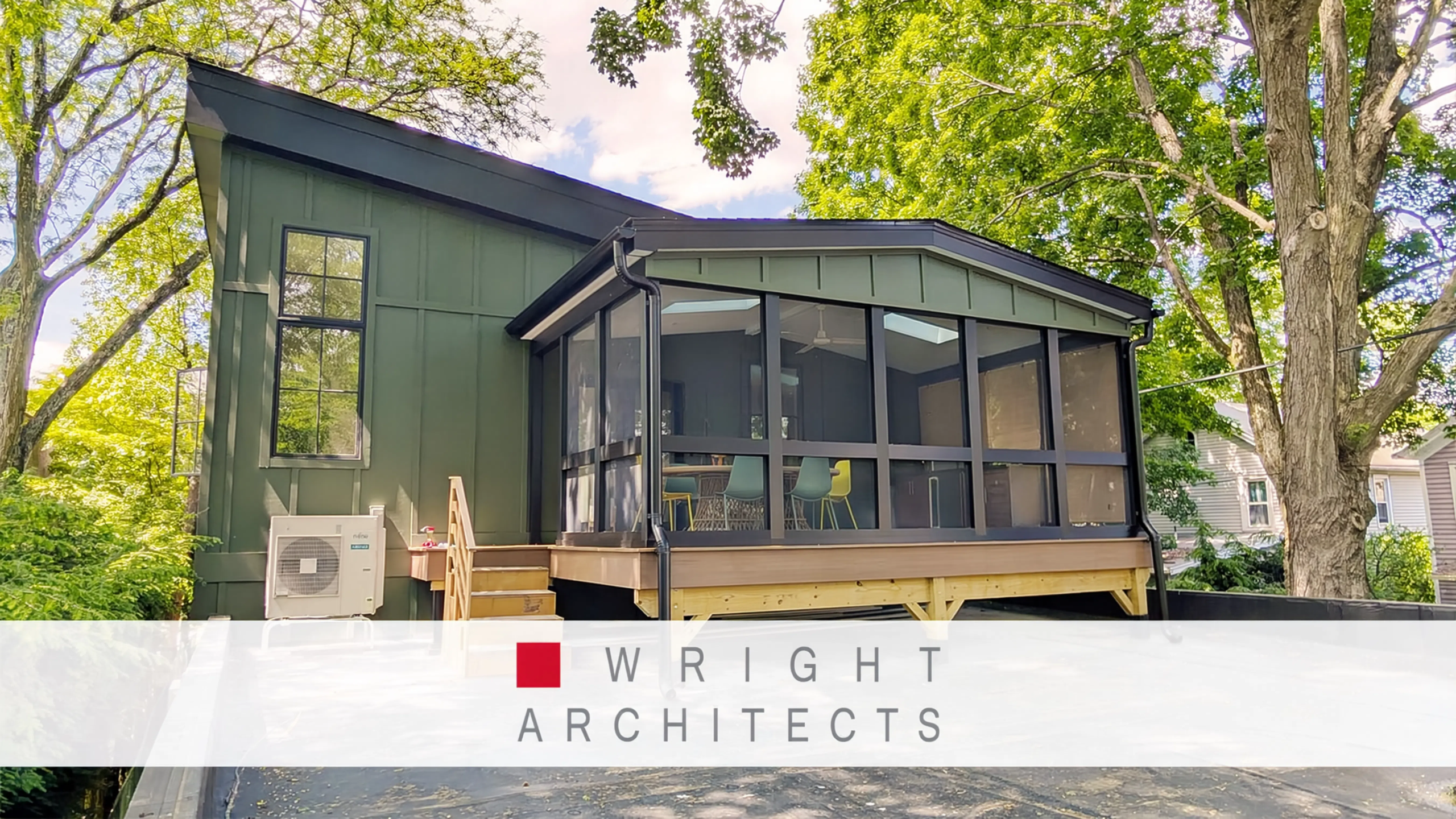
The couple from Woodstock moved in two years after that first site meeting. The house sits tucked below the ridgeline, angled slightly off the axis they’d originally imagined, with a roof form that follows the slope of the hill rather than fighting it. The stream edge is a path now, not a building site. The south-facing glass is exactly the right size, warm in winter, shaded in summer, looking out over a view that the original plan would have turned its back on.
They told us it was nothing like what they’d pictured. And exactly what they’d hoped for.
That gap, between the home you imagine before you know your site and the home your site makes possible, is where good architecture lives.
Have a site you’re considering? We’d love to see it.
Whether you’re early in the land search or already holding a parcel you’re not sure what to do with, we’re glad to take a look together. Reach out to us at wrightarchitectspllc.com, the site analysis conversation is always where the best projects begin.
Thinking about your own project? Let’s talk.