
There’s a quality that the best-performing homes share, and it’s one that rarely gets talked about in architectural conversations because it’s defined by absence rather than presence. No drafts. No cold floors in January. No rooms that are always too hot or always too loud. No mechanical systems cycling on and off through the night. No condensation on the windows on a February morning. No utility bill that arrives in winter and ruins the week.
The home just works. Steadily, reliably, without demanding attention or management. The temperature is even throughout. The air is fresh without being dry. The walls are warm to the touch even when it’s below freezing outside. The mechanical systems are so quiet and so unobtrusive that you stop noticing them which is precisely how it should be.
We think of this as background performance. And it’s one of the things we care most about in our residential design work not because it photographs well or makes for dramatic architectural conversation, but because it’s what a home is actually for. A home that performs quietly in the background frees its inhabitants to live fully in it. It removes friction from daily life. It lets the building do its job so the people inside it can do theirs.
This quality doesn’t happen by accident. It’s the result of a specific set of design decisions, made early in the process, that establish the physical conditions for a home that works without being managed. It’s the result of an envelope designed with enough care that the mechanical systems barely need to run. It’s the result of windows positioned not just for views but for the light quality and thermal behavior that makes a room comfortable without adjustment. It’s the result of mechanical systems sized correctly, installed correctly, and integrated with a building shell that gives them the conditions to do their job efficiently.
In our Hudson Valley residential architecture practice, background performance is not a premium option. It’s a design standard. Here’s what it takes to achieve it.
What Background Performance Actually Means
A home that performs quietly in the background is one where the building’s physical systems thermal envelope, ventilation, heating and cooling, acoustics, moisture management are doing their jobs so well that the occupants never have to think about them. The home maintains comfort automatically, across seasons and weather conditions, without requiring the kind of constant attention and adjustment that poorly designed homes demand.
This is different from a home that’s merely comfortable sometimes. Most homes are comfortable in mild weather in May, in September, when the outdoor conditions aren’t challenging anything. The test of background performance is the hard months. January in the Hudson Valley, when temperatures drop into the single digits and stay there for days. August, when the combination of heat and humidity makes the air feel thick. The shoulder seasons, when freeze-thaw cycling tests building assemblies, and heating and cooling systems are constantly switching modes.
A home that performs quietly in the background handles all of these conditions without drama. The occupants don’t adjust the thermostat five times a day. They don’t close off rooms that are too cold or too hot. They don’t run humidifiers in winter or dehumidifiers in summer because the building’s ventilation system is managing moisture correctly. They don’t wake up at night because the furnace cycled on loudly. They just live in a home that’s handling their climate with enough competence to stay invisible.
That invisibility is the goal. And achieving it is one of the most demanding and most rewarding challenges in residential design.
The Thermal Envelope: Where Background Performance Begins
Every conversation about home performance eventually comes back to the building envelope: the walls, roof, foundation, windows, and doors that separate the conditioned interior from the exterior environment. This is where background performance is won or lost, and it’s where we invest the most design attention on every project.
The reason is straightforward: the quality of the envelope determines how much energy the home needs to maintain comfort, how stable interior temperatures are across changing weather conditions, and whether the mechanical systems have a fighting chance of operating efficiently. A poorly insulated, leaky envelope is a home that’s constantly fighting its climate. A well-insulated, well-sealed envelope is a home that’s working with its climate, storing heat when it arrives, releasing it slowly, and requiring very little mechanical intervention to maintain the conditions the occupants want.
Several members of our team hold PHIUS Certified Passive House Consultant and Certified Passive House Tradesperson credentials, and the Passive House standard provides the most rigorous framework we know for achieving the kind of envelope performance that makes background operation possible. A PHIUS-certified Passive House uses approximately 40 to 60 percent less energy than a code-compliant building of comparable size not because it has more sophisticated mechanical systems, but because its envelope is good enough that the mechanical systems barely have to run.
The specific elements of a high-performance envelope, and how we approach each in our Hudson Valley projects:
Insulation levels. We target R-40 or better in roof assemblies and R-25 to R-30 in walls, achieved through combinations of cavity insulation and continuous exterior rigid insulation. The continuous exterior layer is particularly important because it eliminates the thermal bridging through structural framing members that dramatically reduces the effective R-value of cavity-only insulation systems. In a Climate Zone 5 or 6 building which describes most of the Hudson Valley the difference between nominal and effective R-value in a conventionally framed wall can be 30 percent or more. We close that gap through exterior continuous insulation.
Air sealing. If we had to identify the single most consequential quality-of-life improvement that high-performance construction delivers, it might be air sealing. A well-sealed building has no drafts. The cold air that enters a conventionally built house through gaps around windows, at electrical boxes, at the top plate of exterior walls, through the penetrations that pipes and wires make through the envelope, none of that enters a carefully sealed building. The difference in comfort is immediate and unmistakable. We detail air barriers explicitly in our construction documents, at every penetration and every transition between assemblies, and we verify them with blower door testing during and after construction.
Windows. We specify triple-pane windows on most of our high-performance projects, and we pay as much attention to installation as to the window unit itself. A high-quality window poorly installed with gaps in the air sealing at the rough opening, inadequate flashing at the head and sill, a thermal bridge at the structural framing around the opening, performs like a mediocre window. We draw installation details explicitly and review them during construction to make sure the performance of the specified product is actually realized in the building.
Foundation. The base of the building is one of the most consistently under-insulated and under-detailed zones in conventional residential construction. We design with continuous sub-slab insulation on new construction, exterior foundation insulation to eliminate the cold bridge at the base of the wall, and sealed crawlspaces or conditioned basements that don’t introduce moisture or cold into the building from below. These details offer eliminated cold floors, reduced moisture problems, and stable basement temperatures for the life of the building.

Mechanical Systems: Small, Quiet, and Right-Sized
One of the persistent ironies of conventional residential construction is that the homes with the worst envelopes tend to have the biggest mechanical systems because the systems have to compensate for what the envelope fails to do. And big mechanical systems are, almost by definition, noisy, inefficient, and uncomfortable. They short-cycle running in brief, intense bursts rather than long, steady periods which means they never properly dehumidify the air in summer, never distribute heat evenly in winter, and make their presence known with the kind of mechanical noise that becomes the background texture of daily life in a poorly built home.
A well-insulated, well-sealed building needs dramatically smaller mechanical systems. On our Passive House projects, the heating and cooling loads drop to a point where systems that would be undersized for a conventional building are appropriately sized for a high-performance one. Smaller systems run longer and more steadily. They dehumidify more effectively. They distribute conditioned air more evenly. And they operate at sound levels that are genuinely unobtrusive, a quality that transforms the acoustic environment of the home.
We work closely with mechanical engineers and energy consultants on our projects to ensure that systems are sized based on accurate load calculations for the specific building, not on rules of thumb that assume a conventional envelope. Manual J load calculations, the industry standard method for determining heating and cooling loads produce very different results for a Passive House-level envelope than for a code-minimum one, and the mechanical systems need to reflect that difference.
For heating and cooling on most of our high-performance energy-efficient house plans, we specify air-source or ground-source heat pumps systems that move heat rather than generating it, and that achieve efficiencies three to four times higher than resistance heating at the same outdoor temperatures. Ground-source heat pumps, which exchange heat with the relatively stable temperature of the ground rather than the variable temperature of the outdoor air, offer particularly consistent performance in the Hudson Valley’s cold winters delivering reliable heating efficiency even when air-source systems begin to struggle in extreme cold.
Ventilation deserves specific attention, because it’s one of the least understood and most consequential mechanical decisions in a high-performance building. A well-sealed building doesn’t breathe the way a conventionally built one does which is a feature, not a bug, from an energy perspective, but which means that ventilation must be provided mechanically rather than accidentally. We specify heat recovery ventilation systems HRVs on our sealed buildings. These systems bring fresh outdoor air into the building while capturing the heat from exhaust air before it leaves, maintaining indoor air quality without the energy penalty of simply exhausting conditioned air to the outdoors. A well-designed HRV system runs so quietly and so continuously that occupants are never aware of it, which is exactly right.
Acoustic Performance: The Silence That Holds
A home that performs quietly in the background is, in the most literal sense, quiet. Not silent the sounds of family life, of wind in the trees, of rain on the roof are part of what makes a home feel alive and connected. But quiet in the way that matters: free from the intrusive mechanical sounds, the transmitted noise between rooms, and the penetration of exterior noise that makes a poorly designed home exhausting to inhabit.
Acoustic performance in residential architecture operates at several scales, and we address all of them.
At the building scale, acoustic performance begins with the envelope. A well-insulated, well-sealed building is inherently quieter than a poorly built one, because the same mass and continuity that reduce thermal transmission also reduce acoustic transmission. Triple-pane windows, in addition to their thermal performance advantages, provide significantly better sound attenuation than double-pane alternatives, a benefit that’s particularly noticeable on sites near roads, near water, or in locations with significant ambient natural sound.
At the partition scale, acoustic performance requires deliberate attention to how walls, floors, and ceilings are detailed between spaces. Sound transmission between rooms is governed by the mass of the partition, the decoupling between the two sides, and the continuity of the acoustic barrier. We specify acoustic detailing resilient channels, acoustic batt insulation, mass-loaded assemblies in the partitions where sound separation matters most: between bedrooms and living areas, between home offices and shared spaces, between mechanical rooms and occupied areas.
At the mechanical scale, acoustic performance requires that equipment be selected and installed with sound levels in mind. Ductwork sized for low air velocity doesn’t whistle or rumble. Heat pump equipment installed on vibration-isolating mounts doesn’t transmit mechanical noise into the structure. HRV systems located and ducted thoughtfully contribute to background quiet rather than background noise.
We’ve had clients describe the acoustic quality of their completed homes particularly clients who moved from conventionally built houses as one of the most unexpected and most appreciated qualities. The quiet is something you feel before you consciously identify it. The home just seems calmer, more settled, more genuinely restful than what they were used to. That quality is designed. It’s the cumulative result of dozens of decisions made across the envelope, the partition detailing, and the mechanical system specification, all oriented toward the same goal.
Moisture Management: The Hidden Determinant of Long-Term Performance
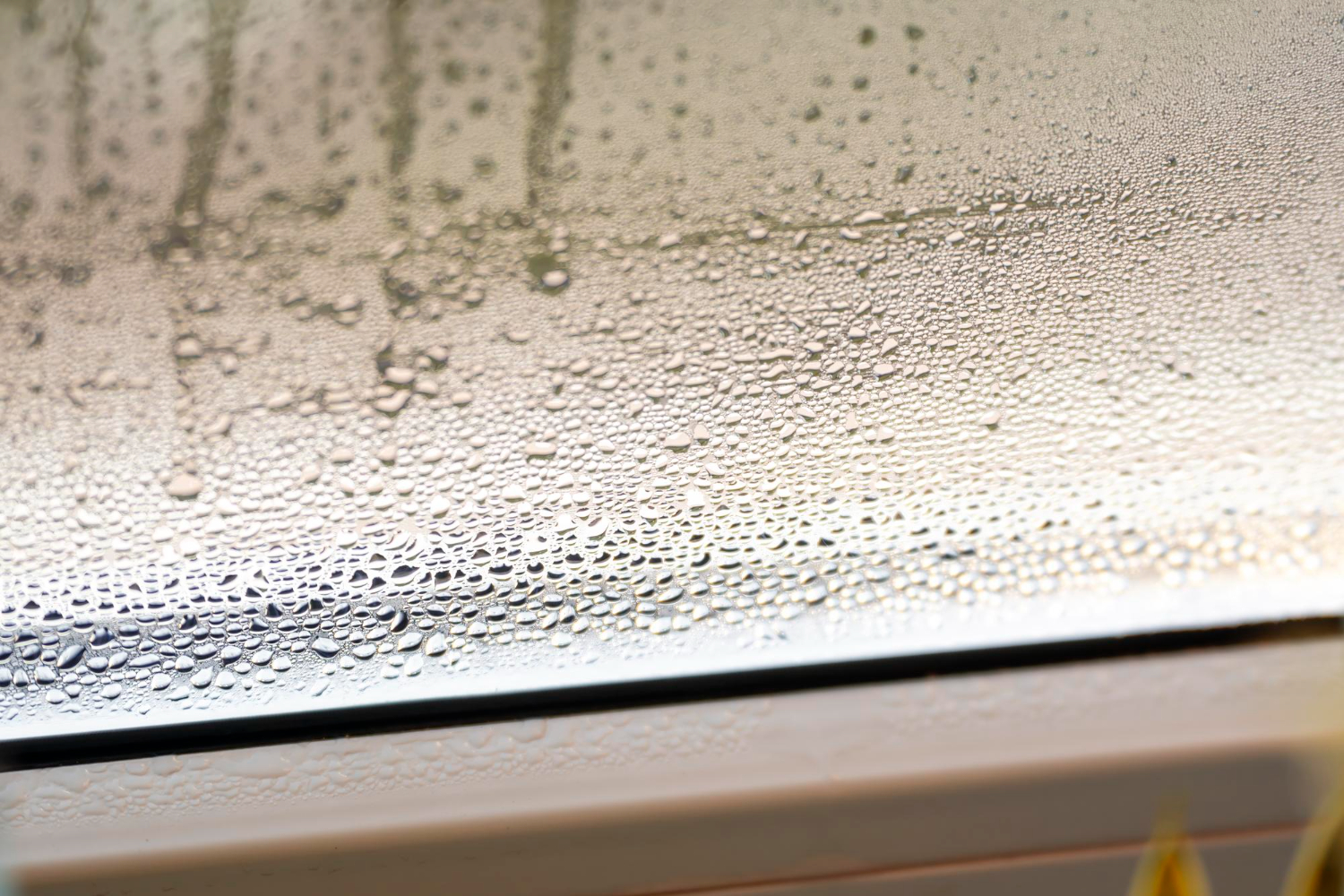
Moisture is the single greatest threat to a building’s long-term performance, and it’s the dimension of building science that’s most likely to be underestimated or ignored in residential construction. A home that manages moisture well performs quietly for decades. A home that doesn’t manage moisture well produces problems: mold, structural deterioration, insulation degradation that announce themselves loudly and expensively.
In the Hudson Valley’s climate, moisture management is a year-round challenge. In winter, warm interior air carrying water vapor can drive into cold wall assemblies and condense on cold surfaces, saturating insulation and promoting mold growth. In summer, humid outdoor air can enter cool wall assemblies from the exterior side and condense on cool surfaces within the assembly. The transition seasons, with their rapid temperature swings, stress building assemblies in ways that require careful detailing of drainage planes and vapor control layers to avoid accumulation.
We approach moisture management as a whole-assembly problem considering not just vapor permeability of individual materials but the behavior of the complete wall or roof assembly across the range of temperature and humidity conditions it will encounter over a year. We use hygrothermal modeling, a computational analysis of heat and moisture transfer through building assemblies on projects where non-standard wall configurations or unusual site conditions create uncertainty about assembly behavior.
For our sustainable architecture in Kingston NY projects and across the broader Hudson Valley, we detail drainage planes at every exterior cladding system to ensure that water that penetrates the cladding and some always does, in rain-driven exposure conditions is directed out of the assembly rather than into it. We detail window and door openings with head flashings, sill pans, and air sealing that manage both water intrusion and vapor diffusion. We specify vapor control layers appropriate to the specific wall assembly and climate zone recognizing that the right vapor control strategy for a wall assembly in Kingston differs from what’s appropriate in a milder climate.
Crawlspaces and basements receive particular attention, because they’re the zones most commonly associated with moisture problems in Hudson Valley buildings. We avoid vented crawlspaces, a construction practice that introduces warm, humid summer air into a cool, damp subgrade space with predictably bad results in favor of sealed crawlspaces with continuous ground vapor barriers and conditioned or semi-conditioned air supply. Below-grade walls are waterproofed with systems appropriate to the specific soil and groundwater conditions of the site, and foundation drains are designed and installed to intercept groundwater before it reaches the building.
The U.S. Department of Energy’s building science resources consistently identify moisture management as one of the most critical determinants of building durability and indoor air quality and one of the areas where the gap between best practice and common practice is widest. We take that gap seriously, and we design to close it on every project.
Indoor Air Quality: The Performance You Breathe
Background performance has a dimension that’s invisible but physiologically significant: indoor air quality. The air inside a home that’s performing well is genuinely different from the air inside a home that’s not fresher, more consistent in humidity, lower in the VOCs and particulates and carbon dioxide that accumulate in poorly ventilated spaces.
This matters more than most people realize. The average person spends the large majority of their time indoors, and the quality of the air in those indoor spaces has measurable effects on cognitive performance, sleep quality, respiratory health, and general wellbeing. A home with good indoor air quality is a home that makes its occupants healthier and more functional, day after day, across the years they inhabit it.
Good indoor air quality in a tight, well-insulated building requires intentional mechanical ventilation, the HRV systems we mentioned earlier combined with careful attention to the sources of indoor air pollutants. We specify low-VOC finishes, adhesives, and insulation materials on our projects, recognizing that a tight building concentrates the off-gassing of interior materials in ways that a leaky one doesn’t. We design combustion appliances, gas ranges, fireplaces with dedicated combustion air supplies that prevent them from depressurizing the building and backdrafting exhaust gases into occupied spaces. We detail radon mitigation provisions in foundations in areas of the Hudson Valley where radon is a known concern.
ArchDaily’s coverage of healthy residential design consistently highlights indoor air quality as one of the most significant emerging priorities in residential architecture, a shift from treating buildings primarily as thermal and structural systems toward understanding them as environments that shape occupant health across decades of habitation. Our practice has oriented around this understanding for years, and it informs how we specify materials, design ventilation, and detail the interfaces between the building and its mechanical systems.
The Homes That Clients Describe Years Later
The feedback that tells us most about whether we’ve achieved background performance doesn’t come at the ribbon cutting or the final walkthrough. It comes a year or two later, when the novelty of a new home has worn off and the building has settled into the rhythms of daily life.
What we hear most consistently from clients in their Hudson Valley homes after a full year of living: they’ve stopped thinking about the house. Not in a neglectful way they’re deeply connected to the spaces and the landscape. But the mechanical management that occupied mental bandwidth in their previous homes, the thermostat adjustments, the room closings, the winter bill anxiety, the summer humidity battles has simply disappeared. The house handles it.
A client near Rhinebeck told us after their first winter that they’d gone the entire heating season without once thinking about their heating system. Not because it wasn’t running it was but because it ran so quietly and so steadily that it never announced itself. The house was just warm, evenly and consistently, throughout the coldest months the Hudson Valley delivered that year.
A client in Kingston described their home’s acoustic environment as the thing they appreciated most unexpectedly. They’d moved from a house on a busy road, where traffic noise and mechanical sounds were a constant presence. In their new home with its triple-pane windows, its sealed envelope, its carefully detailed interior partitions the quiet was something they had to adjust to. It felt, they said, like the house had given them something back that they hadn’t known they’d lost.
These outcomes are what we’re designing toward. Not the aesthetic moments though those matter but the daily experience of a building that does its job so well it disappears, leaving the people inside it free to inhabit their lives without negotiating with their house.
How We Design for Background Performance
The decisions that produce background performance aren’t made at the end of the design process, when the plan is fixed and the drawings are nearly done. They’re made at the beginning, when the building’s orientation, massing, structural system, and envelope configuration are still open questions. Getting them right requires integrating building performance thinking into the earliest design phases treating the thermal envelope, the acoustic strategy, and the moisture management approach as design inputs alongside the floor plan and the site relationship.
As a modern home architect Hudson Valley practice, we structure our design process to ensure this integration happens. We analyze solar orientation and passive solar potential before the floor plan is developed. We run preliminary envelope performance estimates before wall assemblies are finalized. We locate mechanical equipment and ventilation systems in the schematic design phase, not as an afterthought when the plan is locked. We detail acoustic partitions and moisture control strategies in the construction documents with enough specificity to be built from correctly, without field improvisation.
We also stay involved through construction administration visiting the site at the critical milestones when the decisions that determine background performance are being executed. Air barrier installation. Window installation. Mechanical rough-in. These are the moments when the design intent is either realized or quietly compromised, and having an architect present who understands the intent and can verify its execution is one of the most effective protections a client has.
We operate within the Design-Bid-Build model, which keeps us independent of the contractor and working exclusively for the owner throughout construction. That independence lets us evaluate contractor submittals, proposed substitutions, and field conditions based solely on what’s best for the building, not on what’s most convenient for the construction budget.
Hudson Valley Magazine’s coverage of residential living in the region increasingly reflects what we hear from clients: that the homes people value most are the ones that work without being managed that deliver comfort, quiet, and health as a matter of course rather than as the reward for constant attention. That’s the home we’re always trying to design. The one that performs in the background, invisibly and reliably, so that the life in the foreground can unfold without interruption.