There’s a question we hear in some form on almost every residential project we take on, usually somewhere in the middle of the first real design conversation, after the initial excitement has settled into something more honest and considered. It sounds like this: “We know what we need right now but how do we design for what we’ll need in ten years?”
It’s the right question. And the fact that so many clients are asking it reflects something important about how people are thinking about their homes today not as a snapshot of a current moment, but as a long-term investment in a life that will keep changing around them.
Families change. Children arrive, grow up, and eventually leave. Parents age. Careers shift. The home office that didn’t exist five years ago is now the most important room in the house. The guest room that rarely got used has become essential since an aging parent moved closer. The playroom that absorbed years of childhood energy now sits empty, waiting to become something else.
The homes that serve families best over the long arc aren’t the ones that were designed perfectly for a single moment in time. They’re the ones that were designed with enough intelligence, generosity, and foresight to accommodate the changes that life inevitably brings without requiring expensive renovation every decade to stay functional.
This is one of the organizing principles of our Hudson Valley residential architecture practice. We call it designing for change. It’s not a style or a formula. It’s a way of thinking about every spatial decision we make asking not just whether a room serves its intended purpose today, but whether it will be able to serve a different purpose five, ten, or twenty years from now. Whether the structure, the size, the light, and the acoustic separation of a space give it the flexibility to evolve with the family that inhabits it.
Here’s what that thinking looks like in practice, and why it matters for anyone building a custom home in the Hudson Valley today.
Why Most Homes Age Poorly
Before we talk about how to design for flexibility, it’s worth being honest about why so many homes fail to accommodate change well because the failure is almost always a design failure, not a construction one.
Most residential floor plans are optimized for a specific household configuration at a specific moment in time. A young family with two children gets a plan with a master suite, two children’s bedrooms, a playroom, and a mudroom. It works beautifully for a decade. Then the children get older, the playroom becomes vestigial, the mudroom that was sized for small coats and small boots feels oversized, and suddenly the family needs a home office, a real one, not a converted corner of the dining room, but there’s nowhere obvious to put it without a significant renovation.
Or, an empty-nester couple designs a home for two, with a spare bedroom for occasional guests. Then an aging parent needs to move in, and the spare bedroom that was perfectly adequate for a weekend visit turns out to be inadequate for a permanent resident who needs privacy, accessibility, and ideally a separate entrance.
These problems aren’t the result of bad design at the time. They’re the result of design that didn’t look ahead that optimized for the present without asking what the future might require.
The cost of this oversight is real. Renovating a completed home to create a new room, reconfigure a circulation path, or add accessibility features that weren’t built in from the start is dramatically more expensive than incorporating those capabilities into the original design. We’ve seen clients spend more on a post-occupancy renovation to add a home office or modify a bathroom for accessibility than the original design cost to accommodate those same features from the beginning.
Designing for flexibility isn’t just good long-term thinking. In many cases, it’s the most economical decision a homeowner can make.
The Three Horizons: How We Think About Family Time
When we begin a design conversation with a new client, we ask them to think about their family across three time horizons not to predict the future with certainty, but to identify the range of conditions the home should be capable of accommodating.
The near horizon, the next five years. This is the household as it exists now: specific ages, specific needs, specific daily patterns. The toddler who needs a bathtub close to the bedroom. The teenager who needs acoustic separation and a sense of privacy. The working couple who need a home office that actually works. These are the needs the home must serve immediately and well.
The middle horizon, five to fifteen years out. This is where the most consequential changes typically occur. Children leaving for college or independence. Aging parents becoming a household consideration. Career changes that alter how the home is used during the day. A creative practice that needs space. Changing mobility needs. These are the conditions that most residential designs fail to anticipate and that flexible design can accommodate without major renovation.
The far horizon, beyond fifteen years. This is the territory of genuine uncertainty, but it’s not design-irrelevant. A home designed with durable materials, adaptable structure, and accessible circulation can serve its owners into old age and then transition gracefully to a different household without requiring complete reinvention. That flexibility has real financial value, and it reflects a fundamental respect for the building as something more than a disposable consumer product.
We discuss all three horizons with every new client. The conversation produces a spatial brief that’s richer and more demanding than a simple room count one that asks the building to serve not just today’s family but tomorrow’s, across the full arc of the lives that will unfold inside it.
Structural Flexibility: Building in the Capacity for Change
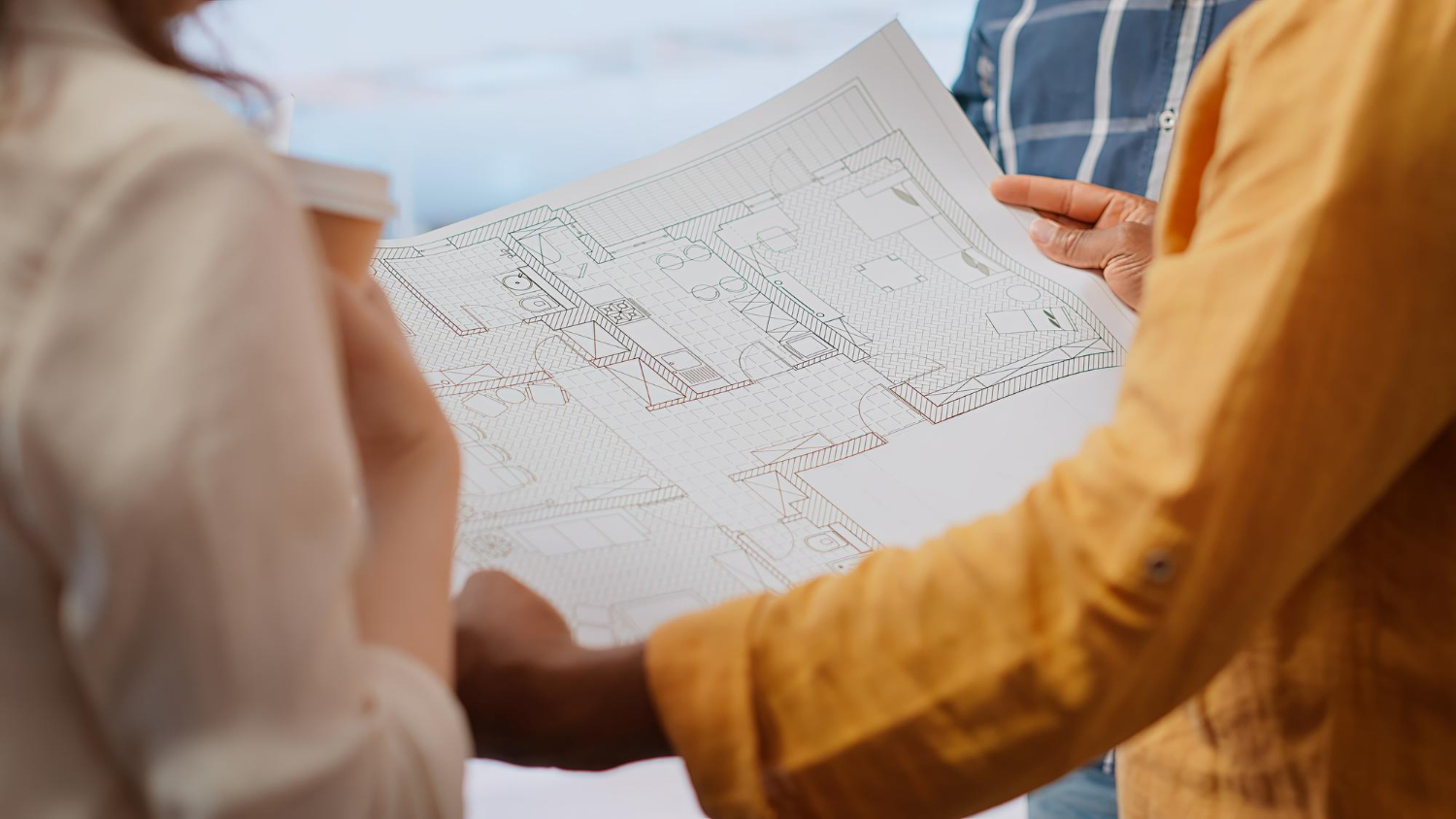
The most fundamental form of residential flexibility is structural, the ability to reconfigure spaces without touching the building’s primary structure. This requires that the structure be designed with future reconfiguration in mind, which is a decision that must be made early in the design process, before the structural system is determined.
In conventional residential wood-frame construction, interior partitions are often load-bearing which means that removing or relocating them requires structural modification that is both technically complex and expensive. A home designed with the assumption that its floor plan is fixed is a home that will fight every future attempt to change it.
We design our residential projects with structural systems that separate the primary structure from the interior partition layout wherever possible. This typically means longer spans, carried by engineered beams or structural panels, that allow interior partitions to be non-load-bearing movable without structural consequence. It costs modestly more to design and build this way. It saves enormously when the time comes to reconfigure.
In our custom home design services, we also think carefully about ceiling heights in terms of long-term adaptability. Rooms with generous ceiling heights nine feet or taller are more adaptable than rooms with standard eight-foot ceilings, because they can accommodate a wider range of uses and can be subdivided horizontally if needed. We don’t specify high ceilings indiscriminately, they have cost and energy implications but we locate them strategically in the spaces most likely to change function over time.
Floor-to-ceiling heights also affect the acoustic flexibility of spaces. A room with a higher ceiling and appropriate mass in its walls and floor is more effective as an acoustic buffer important when a bedroom becomes a home studio, or when a playroom transitions to a teenager’s retreat that needs genuine separation from the main living area.
The Accessory Dwelling Unit: Flexibility at the Property Scale
One of the most powerful tools we have for designing family flexibility into a Hudson Valley residential project is the accessory dwelling unit an ADU, in planning parlance. A properly designed ADU adds a self-contained living space to a property that can serve a remarkable range of purposes across the life of the household.
In the near term, an ADU might be a guest space, a comfortable, private place for visiting family that doesn’t require giving up the primary home’s guest room or converting a space from its regular use. In the middle term, it might become a home for an aging parent close enough for easy connection and support, separate enough to preserve everyone’s privacy and independence. It might become a rental unit that generates income. It might become a home office for a business that has outgrown the space available in the main house. Eventually, it might become a downsized home for the original owners, with the main house transitioning to adult children or a new family entirely.
We’ve designed ADUs across a range of configurations in the Hudson Valley attached garage conversions, detached studio structures, basement apartments with separate entries, and fully independent cottages on larger rural parcels. The regulatory landscape for ADUs in Ulster County has evolved in recent years, with many municipalities becoming more permissive as the housing need in the region has become more acute. We navigate these regulations carefully for each specific parcel and municipality, because the rules vary meaningfully from one jurisdiction to the next.
The design principles for a successful ADU are similar to those for any small residence: generous natural light, efficient circulation, storage that punches above its square footage, and a connection to the outdoors that keeps the space from feeling confined. Done well, an ADU adds genuine value to a property not just appraised value, but the kind of functional value that makes a family’s life more connected and more sustainable across generations.
Accessibility: Designing for the Body Across Time
Every body changes. It’s one of the most certain facts about human life, and one that residential design routinely fails to account for until the changes arrive and the inadequacy of the existing home becomes unavoidable.
We design accessibility into our projects from the beginning not because every client has current mobility limitations, but because the homes we design will be lived in for decades, and the people who live in them will age. Building in accessibility from the start costs a fraction of retrofitting it later.
What does this mean in practice? A selection of specific decisions that seem modest individually but that collectively produce a home that can serve its occupants across the full range of mobility conditions they’re likely to encounter:
Single-floor living capability. Designing the primary living functions bedroom, full bathroom, kitchen, living space, and laundry on a single level, even if the home has multiple floors. This doesn’t mean the upper floors are unused; it means the home remains fully functional if stairs become difficult.
Wider doorways and hallways. Standard residential door widths of 32 inches are adequate for ambulatory adults but uncomfortable for walkers and impassable for wheelchairs. Designing to 36-inch clear width throughout, adds almost nothing to construction cost and dramatically expands the home’s long-term accessibility.
Threshold-free entries. Level transitions at entries no step up into the home, no threshold that creates a tripping hazard are a universal design principle that benefits people with mobility aids, people carrying infants or groceries, and anyone navigating the house in the dark. They also make for better weather sealing when detailed correctly.
Blocking for future grab bars. Installing blocking in bathroom walls at the time of construction horizontal 2x10s or plywood panels behind the finish material at tub, shower, and toilet locations allows grab bars to be installed at any future point without opening the walls. The cost is minimal. The convenience, when the time comes, is significant.
Roll-under space at counters. Designing at least one section of kitchen counter with knee clearance below either as a built-in feature or as a removable base cabinet provides wheelchair accessibility without compromising the kitchen’s function for standing users.
These features aren’t institutional. They don’t make a home look or feel like a medical facility. They simply build in the capability for the home to serve its occupants well regardless of how their physical needs evolve over time. We consider them standard practice in our residential work, and we explain why to every client who asks.

The Home Office: A Permanent Part of the Program
If the past several years have demonstrated anything about how people use their homes, it’s that the distinction between home and workplace has become permanently more porous for a large portion of the residential population. The improvised home offices of 2020 spare bedrooms pressed into service, kitchen tables conscripted as desks have become, for many households, permanent features of daily life.
Designing a real home office not a converted corner, but a dedicated space with appropriate acoustic separation, natural light, storage, and technical infrastructure has become one of the most consistent priorities in our new residential projects. And designing it in a way that remains useful if work patterns change again requires the same flexibility thinking we bring to every other part of the program.
A good home office shares several characteristics. It has genuine acoustic separation from the main living areas not just a door, but walls and floors with enough mass and decoupling to allow a phone call or video meeting without the background noise of household activity. It has a window with good natural light and a view that doesn’t induce cabin fever over the course of a long workday. It has storage integrated into the architecture rather than provided by freestanding furniture. And it has infrastructure power, data, lighting that was designed in rather than retrofitted.
It also has the spatial characteristics to serve a different purpose if the work-from-home pattern changes. A home office sized and detailed as a genuine room not a closet with a desk can become a guest room, a studio, a reading room, or an additional bedroom as household needs evolve. The acoustic separation that makes it work as an office makes it work in any of these configurations. The natural light that makes it pleasant for work makes it pleasant for anything.
We’ve built this thinking into the energy-efficient house plans we develop for clients across Ulster County and the broader Hudson Valley treating the home office not as an optional extra but as a fundamental element of the contemporary residential program.
Multi-Generational Living: Designing for Connection and Privacy
Multi-generational households are becoming more common across the United States, driven by a combination of economic pressures, changing family structures, and a growing recognition that proximity across generations has real quality-of-life benefits for everyone involved. In the Hudson Valley, where housing costs have risen significantly and where many families are navigating the care needs of aging parents without institutional alternatives, multi-generational design has become one of the most requested capabilities in our residential work.
Designing well for multi-generational living requires resolving a fundamental tension: the need for genuine connection between the generations sharing a property, and the equally genuine need for privacy, independence, and the ability to run separate households within a shared setting. Get this balance wrong in either direction too connected or too separated and the arrangement fails for everyone.
Our approach to this challenge typically involves one of several configurations, chosen based on the specific family, the specific site, and the specific municipality’s regulatory requirements:
The attached suite. A self-contained bedroom, bathroom, and sitting area attached to the main house but accessible through a connecting door that can be opened for connection or closed for privacy. This configuration works well when the aging family member is mobile and independent but benefits from proximity and easy access to the main household.
The detached cottage. A fully independent small dwelling on the same property, with its own kitchen, bathroom, bedroom, and living space. This provides complete independence while maintaining the proximity that makes care and connection easy. It also has the most regulatory complexity, as it effectively constitutes a second dwelling unit on the property.
The integrated apartment. A self-contained living unit within the main house structure typically on the lower level, with its own exterior entrance that functions as an independent apartment. This configuration maximizes structural efficiency while providing meaningful separation.
Each of these configurations has implications for zoning, building code compliance, and permitting that vary by municipality in the Hudson Valley. We navigate these implications for every specific project, drawing on our familiarity with the regulatory landscape across Ulster County and the surrounding region.
ArchDaily’s coverage of multi-generational residential design consistently highlights the importance of resolving the connection-privacy tension explicitly in the design rather than leaving it to the inhabitants to negotiate after the fact. The physical configuration of the shared living arrangement shapes the social dynamics of the arrangement in profound ways, and getting it right requires genuine architectural thought rather than simply adding a bedroom and a bathroom to an existing plan.

Future-Proofing the Envelope
Flexible floor plans and adaptable room configurations matter enormously for long-term livability. But flexibility has a physical dimension that’s equally important: the ability of the building envelope and its systems to accommodate the changes that future energy conditions, technological developments, and ownership transitions will bring.
We design every home we build to be solar-ready with roof orientation, structural capacity, and electrical rough-in that allow photovoltaic panels to be added at any future point without significant modification. In the Hudson Valley, where solar economics depend on site-specific factors including orientation, shading, and available roof area, we analyze solar potential during the design phase and document it for future owners, even when clients aren’t installing panels at the time of construction.
We design homes to be EV-ready with conduit from the electrical panel to the garage or parking area that allows a charging circuit to be added without opening walls. This is a detail that adds almost nothing to construction cost and that eliminates a meaningful friction point for future owners.
We also think carefully about the mechanical systems we specify in terms of their adaptability. Heat pump systems which we specify on most of our high-performance projects are upgradeable as the technology improves without requiring replacement of the entire mechanical infrastructure. The refrigerant lines, the electrical service, and the ductwork or hydronic distribution that support today’s heat pump can typically support the next generation of equipment as efficiency standards continue to improve.
The U.S. Department of Energy’s residential energy guidance consistently supports the case for designing buildings that can adapt to evolving energy technologies recognizing that the buildings constructed today will be operating well into a period when both the technology and the economics of energy production will look very different from today’s conditions.
How We Approach the Conversation
We want to be honest about something: designing for flexibility is a more demanding design challenge than designing for a fixed, known program. It requires more upfront thinking, more careful structural planning, and more nuanced conversations about how a family’s life might change over the years they’ll inhabit the home.
It also requires an architect who is willing to be transparent about uncertainty to say “we don’t know exactly how your family will change, but here’s how we can design the home to accommodate a range of futures without over-engineering it” rather than providing false certainty about what the right plan looks like.
As a modern home architect Hudson Valley practice, we’ve found that the clients who engage most productively with this kind of design thinking are the ones who are willing to have honest conversations about their future about aging parents, about children leaving and possibly returning, about career changes, about the way their relationship to work and home has evolved and might evolve further.
Those conversations aren’t always comfortable. But they consistently produce better buildings. Buildings that serve their owners well not just for the first decade but for the full arc of the lives that unfold inside them. Buildings that feel, as those lives change, like they were somehow designed for exactly this because, in the most important ways, they were.
We work within the Design-Bid-Build model throughout our projects, which means we stay involved through construction to ensure that the flexibility features we’ve designed, the structural spans, the blocking, the rough-in provisions, the accessible details are executed as drawn. The contractor builds from complete documents, and we observe construction at key milestones to verify that what’s going into the walls and floors matches what will be needed when the home’s next chapter begins.
Hudson Valley Magazine’s reporting on residential life and real estate trends consistently reflects what we hear from our own clients and from the broader market: that the homes people value most over time are the ones that grow with them gracefully, that don’t require constant reinvention to remain functional, and that hold their value financial and personal across the changes that life brings.
That’s the home we’re always trying to design. Not a snapshot of a single moment, but a vessel for a life in motion flexible enough to change, durable enough to endure, and honest enough to serve its people well across whatever comes next.